
Imagine a doctor's office that can come right to your front door, no matter how many miles you live from the nearest town. That’s the real promise of telehealth in rural areas. It’s all about using technology to deliver healthcare from a distance, tearing down the geographic barriers that so often keep rural residents from getting the care they need, when they need it.
What Is Telehealth in a Rural Context
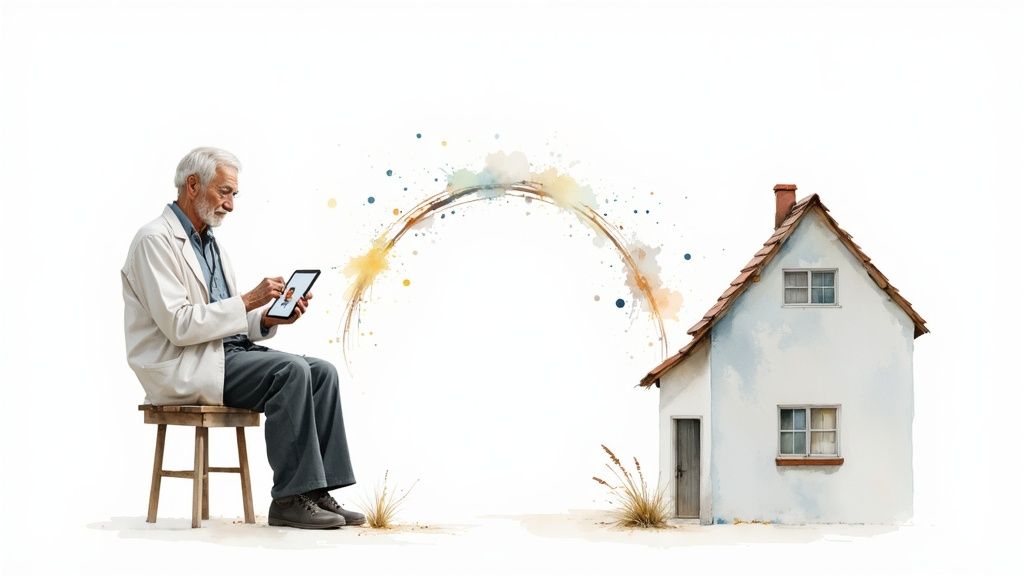
Think of telehealth as a digital bridge. On one side, you have patients living far from the closest clinic or specialist. On the other, you have dedicated doctors, nurses, and therapists ready to help. Technology is what connects them, finally making quality healthcare a reality regardless of zip code.
For anyone living in a rural community, getting to a specialist can be a huge headache. Driving a hundred miles or more for a quick 15-minute follow-up just isn’t practical for most people. Telehealth completely changes that game by bringing the specialist’s office right into a patient’s living room through a screen.
The Main Types of Rural Telehealth
Telehealth isn't just one single thing; it’s really a collection of different tools and methods, each designed to tackle the unique challenges of delivering care in rural settings.
- Live Video Consultations (Synchronous): This is what most people picture when they hear "telehealth." It's essentially a real-time video chat with your doctor, like using FaceTime or Zoom. It works great for routine check-ups, mental health sessions, or urgent care visits where a provider needs to see you.
- Store-and-Forward (Asynchronous): Let's say you have a weird-looking rash. With this method, you can take a clear picture of it and securely send it over to a dermatologist. The specialist can then look at the image on their own time and get back to you with a diagnosis and treatment plan. It’s an amazing way to connect rural patients with specialists without having to line up schedules.
- Remote Patient Monitoring (RPM): This approach lets providers keep an eye on patients with chronic conditions like diabetes or high blood pressure from miles away. A patient might use a Bluetooth-enabled blood pressure cuff at home, and the readings automatically get sent to their doctor. This allows for proactive care, helping catch problems before they become emergencies.
By the end of the COVID-19 public health emergency, rural patients were using telehealth 5.1 percentage points more than urban patients, showing just how vital this connection has become for these communities.
Why It Matters for Rural America
The importance of telehealth in rural areas is about so much more than just convenience. It’s a genuine lifeline. For someone managing a chronic illness, it means getting consistent care without the stress and cost of constant travel. For a parent with a sick child, it means getting a quick answer from a doctor without a long, anxious drive to the nearest clinic.
Modern platforms are making this access even easier. For example, some telehealth services now offer text-based consultations that don't even require a strong internet connection for video. This kind of flexibility is absolutely crucial for closing the healthcare gap that distance creates.
The Real-World Benefits of Rural Telehealth
Forget simple convenience. For rural communities, telehealth in rural areas delivers life-changing results that directly improve health and quality of life. Think of it as a great equalizer, closing the vast distance between isolated towns and the specialized care their residents need—and deserve. The impact goes far beyond a single video call; it’s about fundamentally changing how people manage their health.
This shift is a game-changer for anyone who’s ever had to choose between seeing a doctor and losing a day’s pay. For many, telehealth isn't just a nice alternative. It's the only practical way to get consistent, high-quality medical attention without completely upending their lives.
Connecting to Essential Specialists
One of the biggest wins for rural telehealth is instant access to specialists. It’s common for rural counties to have just one primary care doctor for thousands of people, while specialists like cardiologists, dermatologists, or endocrinologists are a town—or several towns—away.
That distance is a massive barrier. Imagine being the parent of a child with a chronic illness who has to make a four-hour round trip every week for a 20-minute check-in. Telehealth completely erases that burden. Regular virtual appointments let specialists monitor conditions, adjust treatments, and offer expert guidance from hundreds of miles away, saving families countless hours, travel costs, and stress.
A Lifeline for Mental Healthcare
Mental health support is critically lacking in many rural areas, where the stigma can be high and providers are few and far between. Telehealth provides a discreet and accessible lifeline for people who might otherwise go without care. It gives them a way to connect with therapists and psychiatrists from the privacy of their own homes.
This is about more than just convenience—it's a vital tool for improving mental well-being. The ability to get counseling or manage medication without traveling or sitting in a local waiting room encourages more people to finally seek the help they need.
Recent data shows just how profound this impact is. For rural Medicare beneficiaries using telehealth, nearly 80% of visits were for mental health conditions. That number speaks volumes, showing how essential this service has become in filling a critical provider shortage.
Empowering Chronic Disease Management
Managing conditions like diabetes, heart disease, or COPD requires constant attention and regular check-ins with a provider. Telehealth in rural areas makes this kind of ongoing care not just possible, but far less disruptive.
With remote patient monitoring (RPM) devices, people can track key health numbers like blood pressure or glucose levels right from their living room. That data is sent directly to their healthcare team, who can step in early if they spot a worrying trend. This proactive approach helps prevent complications and emergency room visits, leading to better health and a much higher quality of life.
Lowering the Financial Burden of Healthcare
The hidden costs of getting medical care in a rural area add up fast. On top of the appointment fee, patients often have to budget for:
- Fuel Costs: The price of gas for a long drive to and from the clinic.
- Lost Wages: Taking a full day off work, often for a short medical visit.
- Childcare Expenses: Finding and paying for someone to watch the kids.
Telehealth slashes these indirect costs. By cutting out the need for travel, it makes healthcare more affordable and accessible, ensuring that money worries don't stop people from getting the care they need.
While telehealth use has grown, a gap still exists; between 2019 and 2021, 44% of rural Medicare users had a virtual visit compared to 55% of urban users. This difference shows why we need to keep investing in rural digital infrastructure. You can explore more about these trends at the Rural Health Information Hub.
Overcoming Common Rural Telehealth Barriers
While the promise of telehealth is huge for rural America, the reality isn't always a smooth, seamless connection. Think of it like trying to build a bridge between patients and doctors—if a few key planks are missing, the whole structure feels shaky. Real-world obstacles like spotty internet, confusing state laws, and even just not having the right device can stop virtual care in its tracks.
To make this digital bridge strong enough for everyone, we have to get honest about those missing planks. A dropped video call during a critical consultation or a legal roadblock preventing a specialist from seeing a patient one state over are the kinds of practical problems we need to solve. Understanding these barriers is the first step to finally making telehealth work for every rural community.
Navigating the Digital Divide
The biggest hurdle by far is the digital divide. This isn't just about whether you have Wi-Fi; it’s the gap between those with reliable internet and the right tech, and those without. It's a problem with a few different layers: inconsistent access, no device to use, and a lack of confidence in using the technology.
In many rural areas, high-speed broadband is either flat-out unavailable or costs a fortune. This is a fundamental roadblock. A video appointment is useless if the connection keeps freezing or drops you completely.
When we can bridge this divide, telehealth opens up access to specialists, mental healthcare, and better chronic disease management, all while lowering costs.
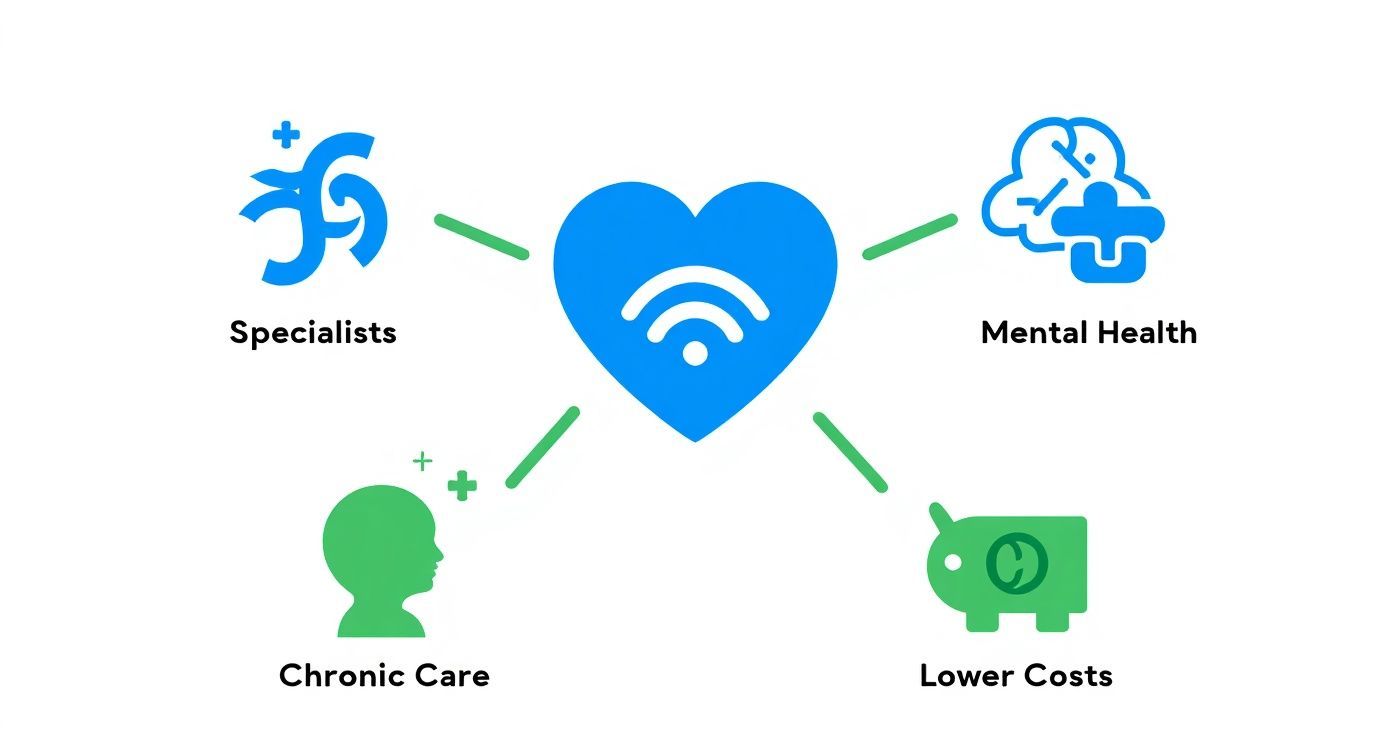
This image really drives the point home—a stable connection is the heart of it all, pumping life-changing benefits into rural healthcare.
Even with internet, many people might not own a smartphone or a computer with a camera. Others might just feel overwhelmed by the technology. This is where community support, like digital literacy classes at the local library, becomes essential. It also means telehealth platforms need to be designed simply, work on low bandwidth, or even function over text.
Untangling Complex Regulations
Another major headache is the tangled mess of state and federal rules, especially around physician licensure. Traditionally, a doctor has to be licensed in the same state where their patient is located. This creates a confusing patchwork of regulations that can stop a doctor from treating someone just a few miles away across a state line.
Imagine a patient in a small Nevada town who needs a specialist, but the closest one is in California. Without some kind of cross-state agreement, that virtual visit might be illegal, forcing the patient to make a long, expensive, and unnecessary trip.
The Interstate Medical Licensure Compact (IMLC) is one major step forward. It creates a faster path for qualified doctors to get licensed in multiple states, opening up a much wider pool of specialists for rural patients to see.
Progress is happening with programs like the IMLC, but providers and health systems still have to navigate a tricky legal landscape. Simplifying these rules is the key to unlocking the true "care from anywhere" potential of telehealth.
Here's a quick breakdown of these common challenges and how we can start tackling them.
Common Rural Telehealth Barriers and Potential Solutions
This table breaks down the primary challenges to implementing telehealth in rural areas and offers practical strategies for patients, providers, and communities to overcome them.
| Challenge | Description | Potential Solution |
|---|---|---|
| Broadband Access | Lack of reliable, affordable high-speed internet in many rural regions. | Federal and state grants for infrastructure, community Wi-Fi hotspots, and telehealth platforms that work on low bandwidth. |
| Device Access | Patients may not own a smartphone, tablet, or computer with a camera. | Community device loaner programs, grants for clinics to provide devices, and using platforms compatible with simpler tech (like text). |
| Digital Literacy | Patients and older adults may lack the skills or confidence to use virtual care technology. | Free digital literacy training at libraries or senior centers, simple and intuitive platform design, and clear, step-by-step instructions from providers. |
| State Licensure Laws | Doctors are often restricted to practicing only in states where they hold a license. | Broader adoption of the Interstate Medical Licensure Compact (IMLC) and advocating for more flexible cross-state practice laws. |
| Provider Training | Rural clinics may lack the resources to train staff on new telehealth workflows and technology. | User-friendly platforms that require minimal training, online training modules, and technical support from telehealth vendors. |
| Patient Trust | Some patients are hesitant about virtual care, worrying about privacy or a lack of personal connection. | Clear communication from providers, HIPAA-compliant platforms, and starting with hybrid care (mixing in-person and virtual visits) to build comfort. |
Overcoming these barriers isn't a single action but a series of committed steps from everyone involved.
Bridging the Workforce and Patient Gaps
Technology is just a tool; the people using it—both on the clinical and patient side—have to be ready. Many rural clinics don't have the budget or staff to train their teams on virtual care workflows, from scheduling to troubleshooting. This workforce training gap can slow everything down and make the experience frustrating for everyone.
At the same time, patient hesitation is a real barrier. Some people, especially older adults, might be skeptical of virtual care. They worry about their privacy or feel it's less personal than seeing a doctor face-to-face. Building trust is crucial. This means providers need to be upfront about how data is protected and explain how telehealth can add to their care, not just replace it.
Ultimately, digital infrastructure isn't just a "nice-to-have"—it's the foundation. A cross-national study found that when rural internet penetration falls below a 40%–50% threshold, telehealth programs just don’t deliver. But once connectivity gets above that point, telehealth adoption is directly linked to better preventive care. The data is clear: investing in broadband has to come first if we want telehealth in rural areas to truly succeed. You can read more about these findings on telehealth effectiveness in the full research.
How to Get Started with Telehealth
Making the leap to virtual care might feel like a big move, but it’s more straightforward than you probably think. Whether you're a patient looking for care or a provider hoping to offer it, a few simple steps can get you started. Think of this as your playbook for both sides of the screen.
For patients, it's all about knowing where to look and how to get ready for a virtual visit. For providers, the focus is on picking the right tools and prepping your practice. The goal here is to make everyone feel confident enough to embrace the benefits of telehealth in rural areas.
A Patient's Guide to Virtual Visits
Ready to give telehealth a try? Your first virtual appointment is just a few steps away. Running through a quick checklist can help you feel prepared and ensure you get the most out of your consultation.
Step 1 Find a Telehealth Provider
Your first move should be to ask your current doctor if their office offers virtual visits—many already do. If not, or if you’re looking for a specialist, you have plenty of other options.
- Insurance Directories: Head over to your insurance provider’s website. They almost always have a searchable directory of in-network doctors who offer telehealth.
- Online Platforms: Services like ChatWithDr are designed to connect you with board-certified physicians for a whole host of conditions, often with same-day availability. You can see how these text-based consults work by checking out this simple guide on how it works.
- Local Health Systems: Check the websites for nearby hospitals or large clinic networks. They usually list their telehealth services right on the homepage.
Step 2 Check Your Coverage
Before you book anything, call the number on your insurance card to double-check that they cover telehealth appointments. It’s a good idea to ask about copays and any potential restrictions. While most insurers, including Medicare, now cover virtual care, it never hurts to verify the details of your specific plan.
Step 3 Prepare for Your Appointment
A little bit of prep work goes a long way. Treat it just like a regular office visit, where you’d want to have everything you need on hand.
- Test Your Tech: The day before your appointment, give your device a quick test run. Make sure your internet connection is stable and that your camera and microphone are working properly.
- Find a Quiet Spot: Pick a private, well-lit room where you won’t be interrupted. Good lighting is especially important for video calls so your provider can see you clearly.
- Write Down Your Questions: Jot down a list of your symptoms, any medications you’re taking, and the questions you want to ask. This way, you won’t forget anything important once the visit starts.
A Provider's Checklist for Rural Practices
Bringing telehealth in rural areas into your practice requires a smart approach that focuses on simplicity, reliability, and clear communication. This checklist is designed to help rural clinics get up and running.
A successful telehealth launch in a rural setting isn't just about technology; it's about choosing systems that respect the unique challenges of the community, like limited bandwidth and the need for straightforward, easy-to-use tools.
1. Select a HIPAA-Compliant Platform
Patient privacy is everything. Your first step is to choose a platform that is fully HIPAA-compliant and built for healthcare. Most importantly, find a solution that works well on lower bandwidth connections, which is a common reality for many rural patients. Your options range from video conferencing software to asynchronous (store-and-forward) and text-based platforms.
2. Train Your Staff on New Workflows
Your front-desk staff, nurses, and medical assistants are the backbone of your telehealth success. Give them clear training on a few key areas:
- Scheduling: How to book virtual appointments and send patients the right confirmation links.
- Intake: How to manage digital check-ins and collect necessary information before the visit.
- Troubleshooting: Basic tech support for patients who might have trouble connecting.
3. Communicate Clearly with Your Community
Patients can't use a service they don't know exists. Launch a straightforward communication campaign to let everyone know about your new telehealth offerings. Use every channel you can to spread the word—flyers in the office, social media posts, ads in the local paper, and even direct mailers. Make sure to explain what telehealth is, what conditions you can treat virtually, and how to book an appointment. Highlighting the convenience and reduced travel time can be a huge motivator.
Telehealth Success Stories from Rural Communities

It’s one thing to talk about theory, but it’s another to see the real-world impact. The true power of telehealth in rural areas isn’t in the technology itself—it’s in the lives it changes. These aren’t just concepts; they’re stories of dedicated providers using technology to finally bridge the healthcare gap.
From small-town schools to entire nations, well-designed telehealth programs are delivering incredible results. These successes show just how adaptable virtual care can be when it’s built around a community’s specific needs, proving what’s possible when distance is no longer a barrier to quality healthcare.
Keeping Kids Healthy and in School
Think about a child in a rural town who needs to see a pediatric specialist. That usually means a parent has to take a day off work—often unpaid—and the child misses school for a long drive into the city. Now, imagine that same specialist visit happens right from the school nurse’s office.
That’s exactly what’s happening in communities with school-based telehealth programs. Here’s how it works:
- A school nurse gets things started, using specialized medical equipment to facilitate a virtual appointment.
- A pediatric specialist from a hospital miles away joins through a secure video call.
- The child gets expert care without ever leaving school property.
The impact is immediate. Student absenteeism goes down, parents don't have to lose a day's wages, and kids get faster access to care for everything from asthma to hearing loss. It’s a simple change that makes a huge difference for families and the whole community.
A National Blueprint for Rural Care
Zooming out, entire countries are showing how smart investments in telehealth can transform public health. Take the country of Georgia, where over 40% of the population lives in rural areas. A major telemedicine initiative launched in 2021 equipped more than 200 rural clinics with modern medical tools, including telehealth equipment for 60 of them.
The results have been striking, especially for managing chronic diseases, which account for over 94% of total mortality in the country. By using telehealth for diabetic retinopathy screenings and sending mobile alerts for cancer screenings, the program has massively improved early detection. While there are still some connectivity hurdles in remote villages, the effort is a powerful example of how coordinated investment can create a model for improving rural health everywhere. You can learn more about how this digital lifeline is closing the healthcare gap in Georgia.
These case studies underscore a vital lesson: the most successful telehealth initiatives are not just about technology. They are about understanding the unique challenges of rural life—like limited bandwidth and transportation hurdles—and deploying solutions that fit.
These stories are just the beginning. As technology gets better and more communities see the benefits of virtual care, we’ll hear even more about how telehealth in rural areas is building a healthier future for everyone, no matter where they call home.
Your Rural Telehealth Questions, Answered
Stepping into the world of virtual care for the first time? It's natural to have a few questions. This quick guide tackles the most common concerns about using telehealth in a rural setting, helping you feel more confident about your healthcare options.
Is My Telehealth Visit Secure and Private?
Absolutely. Healthcare providers are legally required to use HIPAA-compliant platforms that encrypt all your information. This high-level security ensures your virtual visit is just as confidential as an in-person appointment.
The key is to make sure your provider uses a dedicated, secure service, not a standard video chat app like FaceTime or WhatsApp.
What Kind of Technology Do I Actually Need?
You probably already have everything you need. Most virtual visits only require a smartphone, tablet, or computer with a camera, microphone, and a decent internet connection.
Many platforms offering telehealth in rural areas are specifically designed to work well even on the slower internet speeds common in these communities. If video is a no-go, some providers also offer consultations by phone call or even text.
The bottom line is, you don’t need fancy, expensive equipment. Most modern devices are more than capable of handling a secure and effective virtual medical visit.
Will My Insurance Cover a Virtual Appointment?
There's a good chance it will. Coverage for telehealth has expanded dramatically in recent years. Most major insurance plans, including Medicare and Medicaid, now cover a wide range of virtual services, often at the same rate as in-person visits.
It’s always a smart move to give your insurance provider a quick call beforehand just to confirm the details for your specific plan.
Have more questions? You can find more straightforward answers on this detailed telehealth FAQ page.
Ready for fast, convenient care without the travel? ChatWithDr offers same-day, text-based consultations with board-certified doctors for just $39.99, right from your phone. Get started now.
