
When you're not feeling your best, the last thing you want is confusion about where to get help. Is it serious enough for the ER?Or can you wait for your regular doctor? This is where urgent care comes in, filling a crucial gap for issues that need attention now but aren't life-threatening emergencies.
Think of it as the perfect middle ground.
The Urgent Care Dilemma: Making the Right Health Call
Knowing when to head to an urgent care center can feel like a tricky judgment call. That nagging cough, that sprained ankle from your morning run—do they warrant a special trip? It helps to think of your healthcare options like you would for car trouble.
Your primary care doctor is your trusted, long-term mechanic. They handle the routine check-ups, oil changes, and know your car’s history inside and out. The emergency room? That’s the collision center you need after a major, critical accident.
Urgent care is the specialty shop you go to for everything in between. It’s for problems that need to be fixed right away but aren’t total disasters—like a flat tire, a dead battery, or an engine that suddenly starts making a weird noise. This medical "middle ground" is built for speed and convenience, getting you back on the road without the ER's high costs and long waits.
Choosing the Right Level of Care
The explosive growth of urgent care centers shows just how much people need this kind of accessible medical help. In the United States, these centers handled around 27 million visits in 2023, a massive jump from 14 million back in 2014. It’s no surprise the number of centers has nearly doubled in that same time. You can see more on this trend over at TrilliantHealth.com.
Picking the right place to go isn’t just about getting faster treatment; it’s about using the healthcare system the way it was designed. An ER visit for a minor cold can mean hours of waiting and a huge bill. But putting off a visit for a truly serious symptom could be a dangerous gamble.
To make things clearer, here’s a quick comparison of your main options.
Quick Guide: Where to Go for Medical Needs
| Healthcare Option | Best For | Average Wait Time | Typical Cost |
|---|---|---|---|
| Primary Care | Routine check-ups, managing chronic conditions, non-urgent issues, and preventative care. | Varies (days or weeks for an appointment) | Standard co-pay |
| Urgent Care | Minor injuries (sprains, cuts), flu/cold, infections, fevers, and issues needing same-day attention. | 15-45 minutes | Higher co-pay than PCP, much less than ER |
| Emergency Room | Severe chest pain, trouble breathing, major injuries, stroke symptoms, or any life-threatening condition. | Hours (based on triage severity) | Highest cost, often 5-10x more than urgent care |
This table shows how each option is designed for a different level of medical need, with urgent care bridging the gap perfectly for those immediate, but not life-or-limb-threatening, problems.
This simple decision tree helps visualize where to go based on what's happening. It clearly lays out the roles of your doctor, urgent care, and the ER.
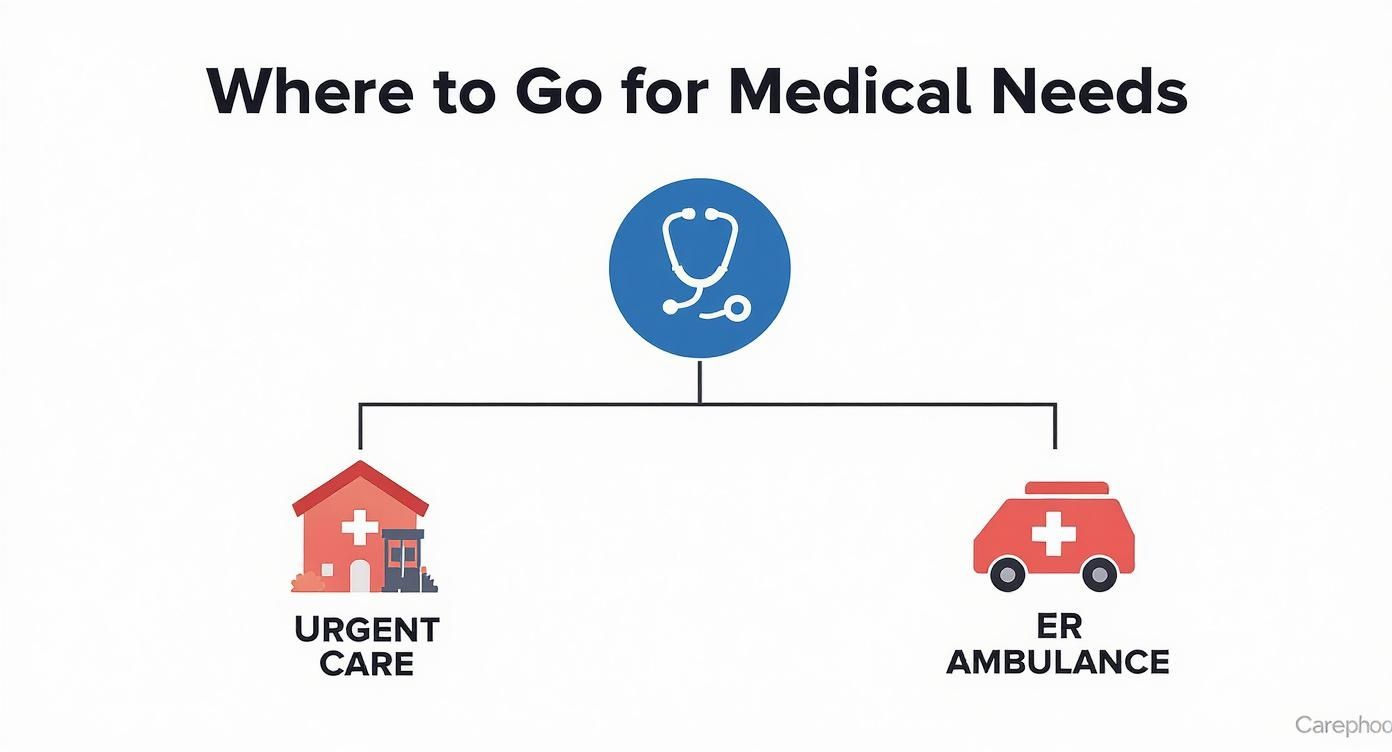
As the graphic shows, urgent care is your go-to for pressing problems that aren't true emergencies. And for those even less severe issues, or when you just need quick advice, exploring convenient telehealth services can be a fantastic, time-saving first step.
Green Lights Symptoms That Point to Urgent Care

Knowing when to go to urgent care often boils down to a gut feeling, but it helps to recognize the specific signs. Think of these "green light" symptoms as your body's way of saying, "I need medical help soon, but it's not a life-threatening emergency." They’re clear indicators that a trip to an urgent care center is the right move for fast, effective treatment.
These clinics are perfectly set up to handle a wide range of common but miserable ailments. In fact, 2023 data shows the most frequent reasons people walk through their doors are respiratory infections (30%), minor injuries (25%), and gastrointestinal issues (15%). This really drives home how urgent care is the sweet spot for conditions needing prompt attention. You can dig deeper into these trends with market findings from Future Market Insights.
Common Colds and Respiratory Issues
A simple cold usually isn’t worth a doctor's visit, but sometimes it digs in its heels and turns into something more. If your cough becomes deep and won’t let up, or if you develop that tell-tale sinus pressure and pain, it’s time to get it checked out.
These are classic signs of a more serious respiratory infection that an urgent care provider can diagnose and treat in a single visit.
- Lingering Coughs and Bronchitis: A cough that’s still hanging around after a week, especially if it’s productive, could be bronchitis.
- Sinus Infections: That combination of facial pain, pressure, headache, and thick nasal discharge is a strong signal of a sinus infection that needs medical attention.
- Sore Throats and Strep: A severe sore throat that appears out of nowhere, particularly with a fever or white spots on your tonsils, definitely warrants a strep test.
- Flu-Like Symptoms: If you're slammed with body aches, fever, and fatigue, an urgent care clinic can test for the flu and prescribe antiviral medication if it's caught early.
Minor Injuries and Accidents
Life is full of those unexpected bumps, twists, and falls. While a major accident is a clear-cut ER situation, urgent care is the perfect place for those less severe but still painful injuries from a weekend soccer game or a simple slip-up at home.
Urgent care centers bridge the gap between a minor scrape you can handle with a bandage and a severe injury needing emergency services. They have the right tools on-site, like X-rays, to figure out what's wrong and get you treated quickly.
Head to urgent care for these types of situations:
- Sprains and Strains: That awkward step off a curb or a fall during a hike can lead to a seriously painful ankle or wrist sprain that needs a proper evaluation.
- Minor Cuts and Lacerations: If you have a cut that's deep enough to need stitches but isn't bleeding uncontrollably, urgent care is exactly where you should go.
- Simple Fractures: Think you broke a finger, toe, or wrist? An urgent care clinic can take an X-ray to confirm a minor fracture and get you started with a splint.
- Minor Burns: Small burns from a hot pan or spilled coffee that cause blistering but are limited in size can be treated effectively to prevent infection.
Skin Conditions and Infections
Sudden rashes, mysterious insect bites, or other skin irritations can be alarming and incredibly uncomfortable. Urgent care providers are great at diagnosing skin issues and prescribing the right cream or medication to bring you relief.
This also includes common problems like urinary tract infections (UTIs), which cause that unmistakable burning sensation and constant urge to go. An urgent care visit can get you a quick diagnosis and the antibiotics you need without having to wait for a primary care appointment.
Red Flags: When to Head Straight to the ER
While urgent care is a fantastic option for many sudden health issues, some situations are just too serious. They demand the heavy-duty resources you'll only find in an emergency room.
Knowing how to spot these red flags isn't just about making a smart choice—it could be about saving a life. Think of these symptoms as non-negotiable signs to skip urgent care and get to the nearest ER or call 911.
When you're facing a potential life-or-limb situation, there's zero room for hesitation. The ER is staffed and equipped 24/7 to handle the most severe medical crises, something urgent care centers simply aren't built for.
Signs of a Heart Attack or Stroke
Some of the most critical emergencies involve the heart and brain. These conditions need immediate, specialized treatment that only a hospital’s emergency department can provide. For both, every single second counts.
Don't wait around to see if these symptoms get better on their own:
- Chest Pain: Especially pain that feels like pressure, squeezing, or a heavy fullness. This feeling might also creep into your shoulders, neck, arm, or jaw.
- Sudden Weakness or Numbness: Pay close attention if this happens on just one side of your body, affecting your face, an arm, or a leg.
- Sudden Confusion: Suddenly struggling to speak, understand what others are saying, or having abrupt vision problems are classic signs of a stroke.
These symptoms are your body's alarm bell for a major medical event where fast treatment is the key to preventing permanent damage or worse.
If you or someone with you has symptoms of a heart attack or stroke, call 911 right away. Paramedics can start life-saving care on the way to the hospital, which is a massive advantage.
Breathing Difficulties and Major Injuries
Being able to breathe is non-negotiable, and any serious trouble with it calls for an emergency response. In the same way, major physical trauma is way beyond what an urgent care clinic can handle and needs the full-scale resources of an ER.
Go straight to the emergency room for these issues:
- Severe Shortness of Breath: This means you're gasping for air or feel like you just can't get enough oxygen in.
- Uncontrolled Bleeding: Any deep cut that's bleeding heavily and doesn't stop even when you apply firm pressure.
- Head or Spine Injuries: Any hard hit to the head, especially if it causes someone to lose consciousness, become disoriented, or have seizures.
- Major Broken Bones: This includes obvious deformities, a bone sticking through the skin, or fractures of big bones like the thigh bone (femur).
- Severe Burns: Burns covering a large area of the body, or any burns on the hands, feet, face, or genitals need immediate emergency care.
Figuring out when to use urgent care is important, but knowing when you absolutely need the ER is vital. These red flags are your definitive guide for making that critical, life-saving decision.
Your Primary Doctor and Telehealth: Other Key Players
Urgent care and the ER are fantastic for immediate, unexpected health issues, but they aren't the only players on your healthcare team. Your primary care physician (PCP) and telehealth services have their own distinct and vital roles. Knowing where each one fits helps you build a smarter, more efficient way to manage your health for the long haul.
Think of your PCP as the head coach of your health. You don't call them for the sudden, game-day injuries that send you scrambling for same-day care. Instead, they’re focused on your long-term strategy, prevention, and managing your overall well-being over years, not just a single episode.
The Role of Your Primary Care Physician
The relationship you have with your PCP is built on something urgent care can't replicate: history and trust. They know your medical background, your family's health patterns, and any chronic conditions you're managing, like diabetes or high blood pressure. This long-view perspective is something a one-off visit to an urgent care clinic simply can't offer.
You should always turn to your PCP for things like:
- Preventive Care: This is their bread and butter—annual physicals, routine vaccinations, and important health screenings.
- Chronic Disease Management: They help you manage long-term conditions with regular check-ins and fine-tuning your medications.
- Non-Urgent Concerns: Have a lingering question or a minor issue without a ticking clock? Your PCP is the perfect starting point.
This focus on proactive, long-term health is the complete opposite of urgent care's reactive, problem-solving model. Urgent care is for the "now," while your PCP is for your entire health journey.
Telehealth: The Convenient First Step
Another powerful option has emerged in recent years: telehealth. This is your go-to for convenience, especially for straightforward issues that don't need a hands-on physical exam. It’s like having a medical expert on call, right from your couch.
Telehealth shines in situations like:
- Minor Illnesses: Getting quick advice for a nagging cold, a new rash, or seasonal allergy symptoms.
- Prescription Refills: Easily renewing a prescription for a stable, ongoing condition without the hassle of an office visit.
- Follow-Up Questions: Need to clarify a treatment plan or ask a quick question? Telehealth saves you a full appointment.
Services like ChatWithDr have made this incredibly accessible, offering a fast and affordable way to handle many common ailments. For issues that aren't true emergencies, exploring an online urgent care option can save you a ton of time, money, and a trip out the door.
By understanding each option's strengths, you can create a seamless healthcare strategy. Your PCP manages your long-term health, urgent care tackles immediate but non-critical issues, and telehealth provides unmatched convenience for minor concerns. Each one is a tool, and knowing when to use the right one is key to staying healthy.
How to Prepare for Your Urgent Care Visit

Once you’ve decided that urgent care is the right move, a little bit of prep work can make all the difference. Taking just a few minutes to get organized before you leave can turn a stressful, hectic experience into a surprisingly smooth one.
Think of it as packing a "go-bag" for your health. When you have everything ready, you can focus on what matters—getting the care you need without the extra anxiety.
What to Bring With You
To sail through the check-in process, grab a few key items before heading out the door. Having these essentials on hand means you can answer the front desk’s questions without frantically digging through your wallet or phone.
Here’s a quick checklist of what to bring:
- Government-Issued Photo ID: Your driver's license or another official ID is a must-have to confirm who you are.
- Insurance Card: Even if you have the details memorized, the physical card prevents any billing snags or delays.
- List of Current Medications: Jot down everything you take—prescriptions, over-the-counter drugs, vitamins, and even supplements. Don't forget the dosages! This is crucial for avoiding dangerous drug interactions.
- List of Known Allergies: Be sure to note any allergies, especially to medications like penicillin.
- Key Medical History: A quick summary of major surgeries, chronic conditions (like diabetes or asthma), and the name of your primary care doctor is incredibly helpful.
Taking a moment to gather this information is one of the smartest things you can do. When a provider gets a clear snapshot of your health right away, they can make a faster, more accurate diagnosis and build a safer treatment plan for you.
Insider Tips for a Smoother Experience
Beyond just grabbing your documents, a couple of proactive moves can save you a ton of time and frustration. Most people just show up and resign themselves to a long wait, but you can often get ahead of the game.
One of the best strategies is to simply call the clinic ahead of time. Ask about their current wait times to get a real sense of what to expect.
Even better, a lot of urgent care centers now offer an online check-in system. This lets you reserve your spot in line from your couch, so the clinic knows you're coming. This one simple step can slash your time in the waiting room and make the whole visit feel like less of an ordeal.
Navigating Costs, Insurance, and Wait Times
Let's be practical. Beyond your symptoms, two things often dictate where you go for care: how much it will cost and how long you'll have to wait. When you're weighing your options, getting a handle on the financial and time differences between urgent care and the ER is a game-changer.
For anything that isn't a true, life-threatening emergency, urgent care is almost always the smarter move for both your wallet and your schedule.
The biggest factor here is the price tag. An ER visit for a minor issue can easily be 5 to 10 times more expensive than getting the exact same treatment at an urgent care clinic. Why the huge gap? It all comes down to the ER’s overhead costs for being staffed and ready for major emergencies 24/7.
Understanding Your Insurance
Your insurance plan is a major piece of this puzzle. An urgent care visit usually involves a straightforward co-pay, which is a flat fee much like you’d pay for a specialist appointment.
The ER, on the other hand, is a different financial ballgame. You'll likely face a much higher co-pay, and you'll probably have to meet your deductible first—that's the amount you have to pay out-of-pocket before your insurance even starts to chip in.
Choosing urgent care for the right reasons isn't just about saving a few bucks. It's about avoiding a surprise bill that could be hundreds, or even thousands, of dollars more. It's a financially savvy decision that stops you from paying emergency-level prices for non-emergency care.
The Value of Your Time
Wait times are another area where urgent care has a clear advantage. Emergency rooms don't work on a first-come, first-served basis. They use a system called triage, which means they prioritize patients based on how severe their condition is.
If you walk in with a sprained ankle or flu symptoms, you're going to be waiting behind anyone with a possible heart attack, stroke, or major trauma. It's not uncommon to sit in an ER waiting room for hours.
Urgent care centers, however, are built for efficiency. Since they treat less severe issues, they typically see patients in the order they arrive. Most people are seen, treated, and heading home in under an hour. It's what they're designed for—getting you the help you need without the long, frustrating delays you'll find at the ER.
Common Questions About Urgent Care
Even with a clear map of what’s an emergency and what’s not, a few common questions always pop up. Let's walk through some typical scenarios so you can feel confident the next time you need to make a quick healthcare decision.
A lot of people ask if they can just pop into an urgent care for something routine, like an annual physical. While most clinics can handle a one-off request like a sports physical, your primary care physician (PCP) is really the best person for that job. Think of your PCP as the expert on you—they track your health over time and know your full story.
What if Urgent Care Sends Me to the ER?
It might feel scary, but if an urgent care clinic tells you to go to the emergency room, it’s a good sign their system is working exactly as it should. This is a standard safety protocol.
Urgent care centers are fantastic at assessing your condition and getting you stable. If they realize your injury or illness is more serious than it first looked and needs a higher level of care, they’ll make sure you get to the right place safely. They’re a crucial first line of defense that knows when to call in the specialists.
Urgent Care for Children
"Do they treat kids?" is another big question. The good news is that most urgent care facilities are well-prepared to handle common childhood illnesses.
Urgent care can be a total lifesaver for parents. When things like ear infections, strep throat, or minor scrapes happen after your pediatrician's office has closed, these clinics offer a fast, reliable way to get your child seen.
However, if you have a very young infant or a child with complex medical issues, it’s always smart to call the clinic ahead of time just to be sure. For a deeper dive into these kinds of questions, you can check out a comprehensive urgent care FAQ for more details.
For fast, non-emergency care without leaving home, ChatWithDr offers 24/7 online consultations with board-certified doctors for just $39.99. Get a diagnosis and treatment plan in hours at https://chatwithdr.com.
