If your eyes are red, itchy, or watery, you might be dealing with pink eye. Officially called conjunctivitis, this super common condition is just an inflammation of the eye's outer layer. It usually brings redness, a gritty feeling, and some kind of discharge. Knowing these first signs is the first step to getting the right treatment and feeling better fast.
What Is Pink Eye and What Are the First Signs?
Pink eye, or conjunctivitis, happens when the conjunctiva gets inflamed. That's the thin, clear membrane that covers the white part of your eye and lines your eyelids. Think of it like the inside of your nose getting irritated when you have a cold—when something bothers the conjunctiva, it gets red and swollen, giving you that classic pink eye look.
And this isn't some rare issue. Infective conjunctivitis actually makes up about 35% of all eye-related problems seen in doctors' offices, with a global rate of 13 to 14 cases per 1,000 people each year. You can dig into the full research on global conjunctivitis trends to see just how widespread it is.
The Universal First Symptoms to Watch For
No matter what’s causing it—a virus, bacteria, or an allergy—most cases of pink eye start out looking pretty similar. These initial signs are your body’s alarm system telling you something is off. Catching them early helps you get a handle on it before it gets worse.
Here are the most common early clues:
- Noticeable Redness: The tiny blood vessels in your conjunctiva swell up, making the whites of your eyes look pink or even bright red.
- A Gritty or Sandy Sensation: It often feels like you have a grain of sand or an eyelash stuck in your eye that you just can't get out.
- Itching or Burning: Your eye might feel incredibly itchy (especially with allergies) or have a constant, annoying burning sensation.
- Watery Discharge: You might notice your eye tearing up more than usual, creating a clear, watery discharge that can make your vision a bit blurry for a moment.
At its core, pink eye is an inflammatory response. That redness, swelling, and discomfort are all signs your eye's defense system is kicking into gear to fight off an irritant or infection.
Just remember, these early symptoms don't tell the whole story. The specific type of discharge—like if it's thick and goopy or thin and watery—along with other clues like a runny nose, will help you and your doctor figure out if the cause is viral, bacterial, or allergic. Getting that distinction right is key because it points you toward the most effective pink eye treatment and gets you back to normal as quickly as possible.
Identifying the Three Main Types of Pink Eye
Knowing the first signs of pink eye is a great start, but it's important to realize that not all cases are the same. Think of "pink eye" as a general description, much like saying you have a cough. To get the right relief, you need to know if that cough is from a cold, allergies, or something more. It's the same with pink eye—the right treatment hinges entirely on figuring out the root cause.
The three main culprits behind conjunctivitis are viruses, bacteria, and allergens. Each one leaves behind its own unique trail of clues. Learning to spot them is the key to understanding what's going on with your eyes and how to fix it.
The image below breaks down the core symptoms you'll notice across the board—like redness, that gritty feeling, and general discomfort.
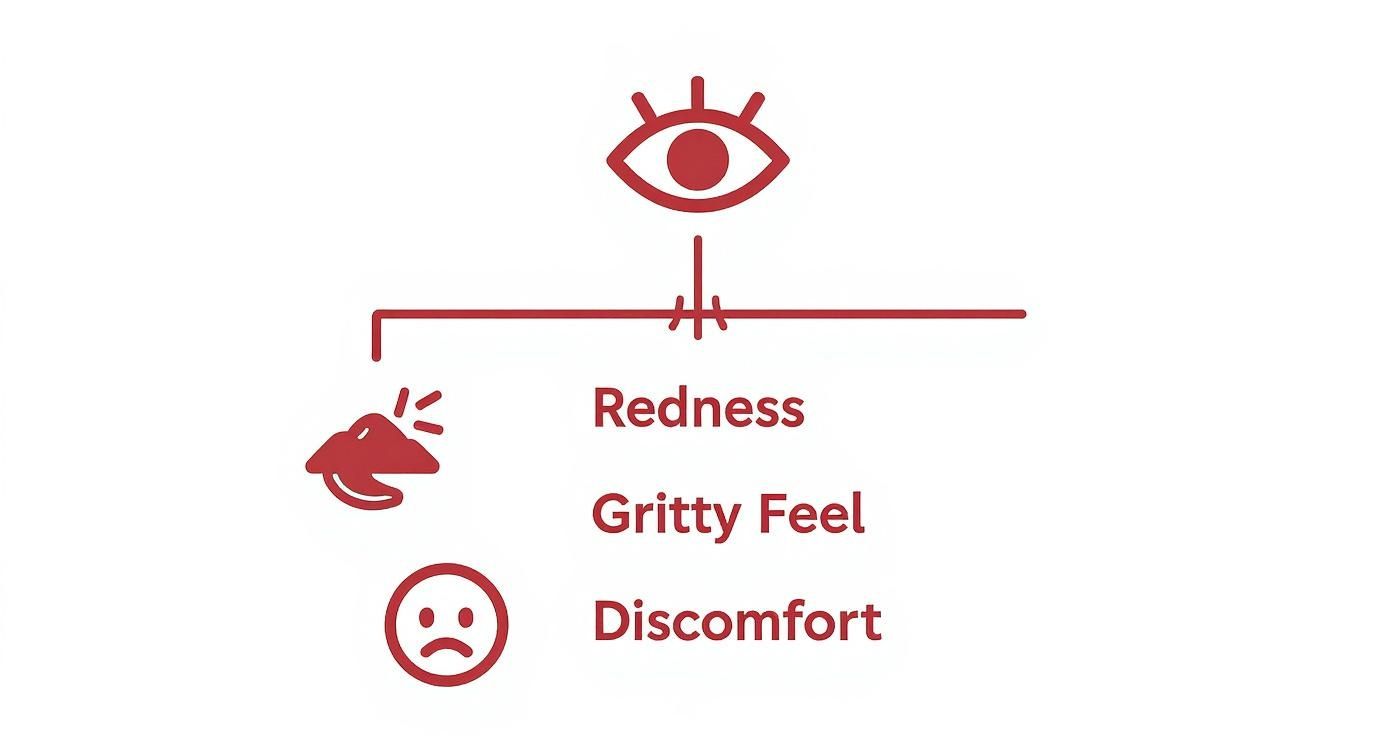
While the base symptoms look similar, the specific details are what will point you toward the right diagnosis.
Viral Pink Eye: The Common Cold of the Eye
Viral conjunctivitis is, by a long shot, the most frequent type, especially in kids. It's often caused by the very same adenoviruses that give you the common cold. That’s why you might get pink eye right along with a runny nose, a cough, or a sore throat.
This type is incredibly contagious. It spreads easily through droplets from a cough or sneeze, or just by touching a contaminated doorknob and then rubbing your eye.
Here are the key symptoms of viral pink eye:
- Watery, clear discharge that feels more like tears than anything thick.
- A burning or sandy feeling, usually starting in one eye and spreading to the other within a day or two.
- Noticeable redness and irritation.
Because a virus is the cause, antibiotics are completely useless. Just like a cold, it has to run its course, which usually takes about 7 to 14 days.
Bacterial Pink Eye: The Sticky Situation
While not as common as the viral version, bacterial pink eye has one giveaway sign: thick, sticky discharge. The bacteria behind it can sometimes be the same ones that cause strep throat.
This form is also highly contagious and spreads through hand-to-eye contact after touching an infected person or surface. The discharge from bacterial pink eye is often much heavier and can make waking up pretty uncomfortable.
Keep an eye out for these distinct signs:
- Thick, pus-like discharge that's yellow, green, or even whitish-gray.
- Eyelids that are stuck together in the morning from all the dried gunk.
- Soreness and redness that might start in one eye but can easily jump to the other.
Unlike viral cases, bacterial pink eye often needs prescription antibiotic eye drops or ointments to knock out the infection.
Allergic Pink Eye: The Itchy Intruder
Triggered by things like pollen, pet dander, dust mites, or mold, allergic conjunctivitis is your body's immune system overreacting. It’s not an infection, which means it is not contagious. It typically affects people who already deal with other allergic conditions, like hay fever or asthma.
The absolute hallmark of allergic pink eye is intense itching. While other types might be irritating, that overwhelming urge to rub your eyes is a dead giveaway for an allergic reaction.
The main symptoms to watch for are:
- Intense, relentless itching in both eyes.
- Significant swelling or puffiness of the eyelids.
- Watery, clear discharge along with the redness.
Treatment for this type is all about managing the allergy. That usually means antihistamine eye drops, cool compresses, and doing your best to avoid whatever allergen is causing the problem.
Viral vs. Bacterial vs. Allergic Pink Eye Symptoms
To make it even clearer, here’s a simple side-by-side comparison to help you tell the three main types of pink eye apart at a glance.
| Symptom | Viral Pink Eye | Bacterial Pink Eye | Allergic Pink Eye |
|---|---|---|---|
| Discharge | Watery, clear | Thick, yellow/green pus | Watery, clear |
| Itching | Mild | Mild | Intense |
| Contagious? | Highly Contagious | Highly Contagious | Not Contagious |
| Other Symptoms | Cold, flu, or sore throat | Can accompany an ear infection | Sneezing, runny nose, asthma |
| Eyes Affected | Starts in one, often spreads | Can be one or both | Usually affects both eyes |
Knowing these key differences is crucial for getting the right care. If you think you have a bacterial infection, a service like ChatWithDr can offer a quick diagnosis and get a prescription for antibiotic drops sent to your pharmacy, often without needing an in-person visit. That means you can start feeling better, faster.
Effective At-Home Treatments for Pink Eye Relief

When your eyes are red, gritty, and uncomfortable, the first thing on your mind is relief. The good news is that while many pink eye cases clear up on their own, several simple at-home treatments can make a huge difference in easing your symptoms.
Think of at-home care as your first line of defense. The goal isn’t to instantly cure the infection but to manage the frustrating symptoms—like itching and discharge—so your body can get to work fighting it off. But the right approach really depends on what kind of conjunctivitis you have.
Compresses: The Right Tool for the Job
Compresses are one of the best ways to soothe irritated eyes, but one size doesn't fit all. Using the wrong temperature can be ineffective or even make you feel worse, so it's crucial to match the compress to your symptoms.
Cool Compresses for Viral and Allergic Pink Eye
If you're dealing with the watery discharge and intense itchiness that come with viral or allergic pink eye, a cool compress is your best friend. The cold helps constrict the blood vessels, which tones down inflammation, reduces redness, and offers immediate relief from that maddening itch.
To do it right:
- Soak a clean, lint-free cloth in cool water.
- Wring it out well so it's just damp.
- Gently lay it over your closed eyes for a few minutes.
- You can repeat this several times a day, but always use a fresh cloth each time to avoid spreading germs.
Warm Compresses for Bacterial Pink Eye
On the other hand, if you have the thick, sticky discharge typical of bacterial pink eye, a warm compress is the way to go. The warmth helps soften and loosen all that gunk and crust, making it much easier to clean your eyelids and lashes without irritating them further.
A warm compress doesn't fight the bacteria directly, but it provides significant comfort by helping to clear away the sticky buildup that can make your eyelids feel glued shut, especially in the morning.
Just follow the same steps as above, but use warm (not hot!) water. This simple trick can make a massive difference when you're managing a bacterial infection.
Keeping Your Eyes Clean and Irritant-Free
Good hygiene is non-negotiable for managing pink eye and stopping its spread. Your eyes are incredibly delicate, so a gentle touch is key.
- Wipe Gently: Use a fresh, damp cotton ball or a clean washcloth to wipe away discharge. Always start at the inner corner (near your nose) and wipe outward.
- Use a New Surface: Grab a new cotton ball or a clean section of the cloth for every single wipe. This prevents you from reintroducing germs. If both eyes are infected, use separate cloths for each.
- Avoid Rubbing: It’s tempting, but don't do it! Rubbing will only make the inflammation worse and can easily spread the infection to your other eye or to someone else.
Debunking Unsafe "Home Remedies"
You'll find all sorts of "miracle cures" online, but it's critical to stick with what's proven to be safe. Many popular but unverified remedies are ineffective at best and downright dangerous at worst. Never put things like breast milk, colloidal silver, or other DIY concoctions in your eyes. They can cause severe irritation, allergic reactions, or even chemical burns.
If home care isn't cutting it, or if you think you have a bacterial infection that needs antibiotics, it's time to talk to a professional. Services that offer an online prescription for pink eye are a fast, convenient way to get a diagnosis and the right medication without ever leaving your house.
When You Need to See a Doctor for Pink Eye
While most cases of pink eye are more annoying than dangerous, it’s critical to know when to stop with the home remedies and call in a professional. Think of it like a nagging cough—most of the time, it's just a cold, but every so often, it’s a sign of something more serious.
Learning to spot the red flags is key. It ensures you get the right care at the right time. At-home treatments can certainly soothe mild symptoms, but they’re no replacement for a real diagnosis when things get complicated. Blowing off certain warning signs can lead to bigger eye problems or leave a bacterial infection untreated.
Red Flags That Signal a More Serious Problem
Some symptoms are a clear signal to stop guessing and get help. These go beyond the usual gritty, itchy feeling of pink eye and might point to a problem with your cornea or another part of your eye. Don’t wait these out.
If you experience any of the following, it’s time to talk to a doctor right away:
- Moderate to Severe Eye Pain: Pink eye is irritating, for sure. But it shouldn't be truly painful. If you feel a sharp, deep, or aching pain, something else is going on.
- Blurred Vision or Vision Changes: A little temporary blur from goop in your eye is one thing. But if your vision stays blurry or gets worse, that's a major warning sign.
- Intense Sensitivity to Light (Photophobia): Finding yourself squinting in a normally lit room? If light feels downright painful, it could mean the inflammation is more serious than you think.
- The Feeling of Something Stuck in Your Eye: A gritty feeling is pretty standard. But if you have a strong, persistent feeling that something is actually lodged in your eye, it’s time for a professional to take a look.
Your vision is precious. Think of symptoms like severe pain or blurry vision as your eye’s emergency alert system. Don't ignore it.
These red flags could point to conditions like keratitis (an inflamed cornea) or even an ulcer on your eye. Both need immediate medical care to prevent any lasting damage.
When Prescription Treatment Becomes Necessary
Beyond those urgent warnings, there are other times when a doctor's help is the smartest move. This is especially true if a bacterial infection is the culprit behind your pink eye.
Unlike the viral kind that just has to run its course, bacterial conjunctivitis usually needs prescription antibiotic eye drops or ointments to knock out the infection. A doctor can confirm what you’re dealing with and prescribe the right medicine. This not only helps you feel better faster but, just as importantly, cuts down on how long you're contagious. After starting antibiotics, plan to stay home for at least 24 hours.
The impact of pink eye is bigger than you might think. In the United States, an estimated 6 million people get acute conjunctivitis every year. The cost to treat just the bacterial form is staggering, ranging from $377 million to $857 million annually.
The Convenience of Telehealth for Eye Care
Luckily, getting a professional diagnosis doesn't always mean trekking to a doctor's office. For clear-cut cases of suspected bacterial pink eye—without any of the serious red flags—telehealth is a fantastic option.
Platforms that offer online urgent care for pink eye let you get a diagnosis quickly and conveniently, right from your couch. You just fill out a simple online form, and a board-certified physician reviews your symptoms. If you need a prescription, they can send it straight to your pharmacy. It’s a simple way to skip the waiting room and start feeling better, faster.
How to Prevent the Spread of Contagious Pink Eye

Once you know you have contagious pink eye, the game plan changes. It’s not just about getting better anymore; it’s about protecting everyone around you. Viral and bacterial conjunctivitis are notorious for spreading like wildfire, quickly turning your personal problem into an issue at home, school, or the office.
Think of it this way: you’re now the first line of defense. A few simple hygiene habits can build a wall around the infection, stopping it in its tracks. This approach doesn't just keep your friends and family safe—it also prevents you from reinfecting yourself, speeding up your own recovery.
Master the Basics of Hygiene
The single most powerful weapon in your arsenal is good old-fashioned handwashing. The germs that cause pink eye get around by touch. You rub an itchy eye, then grab a doorknob, and just like that, the next person to come along is at risk.
Diligent handwashing isn’t just a good idea—it’s the cornerstone of containing conjunctivitis. Every single wash breaks the chain of transmission, protecting both you and the people you care about.
Besides just washing your hands, you have to make a real effort to avoid touching or rubbing your eyes. It's a tough habit to kick, especially when they’re irritated, but it is absolutely critical. If you must touch your face, wash your hands with soap and warm water right before and immediately after.
Create a No-Sharing Zone at Home
Some personal items are magnets for germs, basically acting as a superhighway for the infection. While you have pink eye, you need a strict "no-sharing" rule for everyone in your household.
These items are now for your use only:
- Towels and Washcloths: Grab a fresh, clean towel for your face and hands every single day.
- Pillowcases and Bed Linens: Your pillowcase should be changed daily. Wash all bedding in hot water to kill any lingering germs.
- Eye Makeup: Stop using eye makeup immediately. Mascara wands and eyeliner tips are perfect breeding grounds for bacteria. You’ll need to throw away any products you used right before or during the infection to avoid reinfecting yourself later.
- Contact Lenses: It’s time to switch to glasses until your eyes are totally clear. Toss any disposable lenses you've worn and give your lens case a thorough cleaning.
- Eye Drops: Never, ever share your eye drops—prescription or otherwise—with anyone else.
Navigating Work, School, and Public Spaces
It can be confusing to know when it’s safe to go back out into the world. For bacterial pink eye, the rule of thumb is that you’re no longer contagious 24 hours after you start antibiotic treatment. Viral pink eye is a different story; you’re contagious as long as you have symptoms, which can sometimes last for up to two weeks. Always follow your doctor's specific guidance.
The spread of conjunctivitis is a bigger deal than you might think. A survey of 155 experts found that 21% have seen a rise in infectious conjunctivitis outbreaks across the globe in the last decade alone. You can read more about these global trends in infectious conjunctivitis.
By taking these steps seriously, you're doing more than just managing your own symptoms. You’re playing a vital role in public health, making sure your minor infection doesn’t become a major headache for everyone else.
Your Top Questions About Pink Eye Answered
Even when you know the basics of pink eye, a few questions always pop up once you're dealing with it. This is your go-to guide for those practical, real-world concerns. We’ll cover everything from how long you'll be stuck with it to when you can finally head back to the office.
Think of this as the final piece of the puzzle. The goal is to clear up any lingering confusion so you can handle your recovery with total confidence.
How Long Does Pink Eye Typically Last?
How long you’ll be dealing with red, itchy eyes depends entirely on what’s causing it. Each type of pink eye has its own timeline, which is why figuring out the root cause is so important for knowing what to expect.
- Viral Pink Eye: Just like the common cold, this one has to run its course. Symptoms usually get worse for the first few days before they start to get better. Expect it to stick around for about 7 to 14 days, though a stubborn case might last up to three weeks.
- Bacterial Pink Eye: This type clears up much faster once you start treatment. After you begin using prescription antibiotic eye drops, you should feel a huge improvement within 24 to 48 hours. You’ll need to finish the full 5 to 7 day course of antibiotics to make sure the infection is completely gone.
- Allergic Pink Eye: This one is all about your environment. Your symptoms will hang around as long as you’re exposed to whatever you're allergic to. Once you get away from the trigger (or start using allergy drops), you should feel relief pretty quickly.
The main takeaway? Viral pink eye is a waiting game, but bacterial pink eye responds fast to medication. If your symptoms aren't getting better in the expected timeframe, that’s your cue to check in with a doctor.
When Is It Safe to Go Back to Work or School?
This is a big one, especially since some forms of pink eye spread like wildfire. When you can return to your daily grind all comes down to which type you have and when you’re no longer contagious.
For bacterial pink eye, the rule is pretty clear. You’re typically in the clear 24 hours after starting your antibiotic treatment. As long as the goopy discharge is mostly gone, you can usually head back to work or school.
Viral pink eye is a different beast. It's extremely contagious as long as you have symptoms, especially watery, red eyes. You might need to stay home for a week or even longer until the redness and tearing stop. It’s always best to check with your doctor and follow your workplace or school’s specific rules.
And if you have allergic pink eye? You’re not contagious at all, so there’s no need to stay home.
Can I Get Pink Eye in Both Eyes?
Yes, and it happens all the time. How it spreads can even give you a clue as to what type you have.
- Viral conjunctivitis almost always starts in one eye and spreads to the other within a day or two. That’s a classic sign of a viral infection.
- Bacterial conjunctivitis can also jump from one eye to the other, especially if you touch the infected eye and then your other eye. Sometimes, though, it stays put in just one.
- Allergic conjunctivitis nearly always hits both eyes at once. Because it’s a reaction to something in your environment, like pollen, both eyes usually react at the same time with that signature intense itch.
If you have pink eye in just one eye, be extra careful about washing your hands and try not to touch your face to keep it from spreading.
Do I Always Need a Doctor for Pink Eye?
While you can often manage a mild case of viral pink eye at home with things like cool compresses, it's never a bad idea to get a professional opinion. A doctor can tell you for sure what kind of pink eye you have, which is the key to getting the right treatment.
You absolutely need to see a doctor if:
- You think it's bacterial and need an antibiotic prescription.
- You’re in serious pain, your vision is blurry, or you’re super sensitive to light.
- Your symptoms aren’t getting any better after a few days.
- You wear contact lenses and develop any pink eye symptoms.
For more answers to common health questions, you can always check out our full FAQ page for additional information and support. Getting a clear diagnosis is the fastest way back to feeling normal.
Feeling unsure about your eye symptoms? Don't wait and wonder. With ChatWithDr, you can get a fast, private online consultation with a board-certified U.S. physician for just $39.99—no appointment or video call needed. Get a diagnosis, a treatment plan, and any necessary prescriptions sent to your pharmacy in as little as 1-2 hours. Skip the waiting room and start feeling better today by visiting https://chatwithdr.com.