Absolutely. If you don't have insurance, online urgent care is a fantastic option. These services are built around clear, upfront pricing—usually a single flat fee—which makes getting quality medical care a reality, even without a health plan.
How Online Urgent Care Works Without Insurance
When you're uninsured and feeling sick, the fear of a massive, surprise medical bill can feel worse than the illness itself. Online urgent care completely flips that script, offering a refreshingly simple and affordable way to see a doctor.
Forget the confusing billing you get from a traditional clinic or ER. Telehealth platforms run on a straightforward, transparent model. You pay one flat fee for your visit. That's it.
This approach gets rid of the financial curveballs that often come with in-person care, where you might get hit with separate charges for the facility, the doctor, and who knows what else. For common problems like a sinus infection, an annoying rash, or a UTI, a virtual visit can easily save you hundreds of dollars compared to an emergency room trip.
A Look at the Costs: Online vs. In-Person Care
When you're paying out-of-pocket, every dollar counts. Here’s a quick breakdown of what to expect when comparing online urgent care to traditional clinics or the ER.
| Feature | Online Urgent Care | In-Person Clinic or ER |
|---|---|---|
| Consultation Cost | $40 – $100 (flat fee) | $150 – $800+ (plus facility fees) |
| Wait Times | Minutes to a few hours | 1-4+ hours |
| Prescriptions | Sent to your local pharmacy | Given on-site or sent to pharmacy |
| Follow-Up | Often included or low-cost | Usually requires another full visit/fee |
The numbers speak for themselves. For straightforward, non-emergency issues, the savings and convenience of going online are hard to ignore.
This model isn't just about saving money; it’s about making healthcare accessible to everyone. The global market for virtual urgent care is exploding, and it's driven by people just like you who are looking for convenient, affordable options.
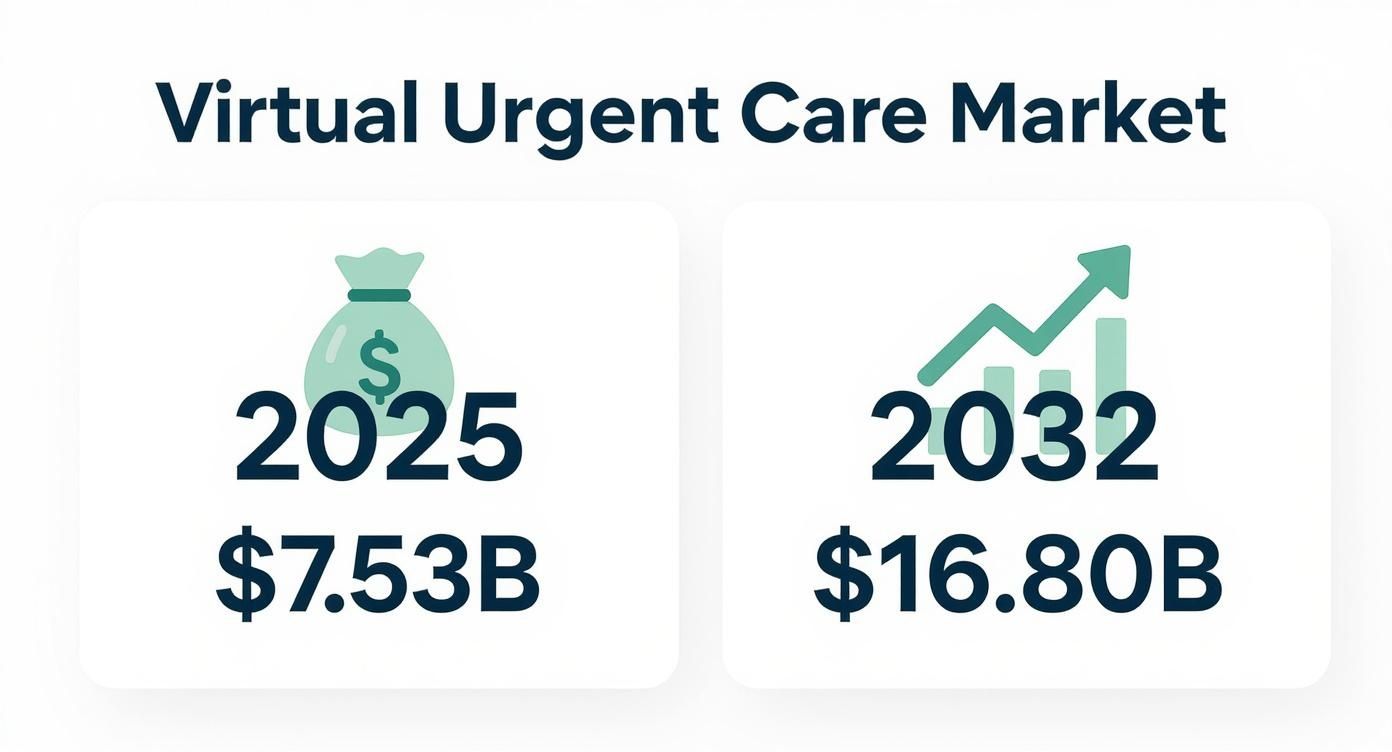
This massive growth, expected to hit $16.80 billion by 2032, shows just how many people are embracing this modern approach to healthcare. The entire system is designed for clarity and efficiency, so you know exactly what you’re paying for right from the start.
To get a feel for how a simple, direct-to-patient process works, you can see our approach to connecting patients with doctors at https://chatwithdr.com/how-it-works.
How To Find a Reputable Telehealth Provider

With telehealth options popping up everywhere, finding one you can trust feels like searching for a needle in a haystack. But it doesn't have to be. The key is knowing exactly what to look for and, just as importantly, what to avoid.
A legitimate online urgent care no insurance provider will always be upfront about its services and costs. Their website is your first clue. Start by looking for a dedicated page on "self-pay" or "cash-pay" pricing. You want to see a clear, flat fee per consultation so you know exactly what you're paying with no surprises.
Next, find out what conditions they actually treat. Vague promises are a red flag. A reputable service will list specific ailments, showing they have established protocols for common issues. For a good example of what a clear menu of options looks like, you can see the broad range of issues addressed by our telehealth services.
Your Pre-Booking Checklist
Before you ever pull out your credit card, run through this quick mental checklist. Asking these questions upfront can save you a world of time, money, and frustration down the road.
- State Licensing: Does the provider explicitly state they operate where you live? Doctors must be licensed in the state where the patient is located.
- Physician Credentials: Can you easily find information about their medical team? Good platforms are proud to show off their board-certified, U.S.-based doctors.
- Prescription Policies: Is it obvious how prescriptions are handled? They should clearly state that the medication cost at the pharmacy is a separate charge from the consultation fee.
One of the biggest signs of a quality provider is their commitment to HIPAA compliance. Look for a notice or badge on their website confirming your personal health information is protected with secure, encrypted technology.
Spotting Potential Red Flags
Knowing what to look for is only half the battle; you also need to know what to run away from. Steer clear of any platform that seems evasive about its pricing or process.
Be cautious of sites with zero patient reviews or testimonials. Social proof is a powerful gut check, and a complete lack of feedback could mean the service is too new to be reliable—or worse, has a history of unhappy patients.
Finally, if the website is clunky, unprofessional, or hard to navigate, trust your instincts. Your health is too important to leave to a provider who can't even get their own digital front door in order.
Navigating Costs and Payments Without Surprises
When you're paying for medical care yourself, the last thing you want is a surprise bill. Let's be honest, that's one of the biggest headaches of the traditional healthcare system. Thankfully, this is where most online urgent care no insurance services really shine. They almost always operate on a simple, flat-fee model.
This means you know exactly what the visit will cost before you even connect with a doctor. For most common issues, you can expect to pay somewhere between $35 and $100. That single fee usually gets you the doctor's time to review your symptoms, a diagnosis, and a clear treatment plan.
But it’s just as important to know what that price tag doesn't cover. Any prescription medications, lab tests the doctor might recommend, or future follow-up visits are almost always extra costs.
Clarifying the Total Cost
To make sure your affordable visit actually stays affordable, take a minute to confirm the all-in price. Good platforms are upfront about this—they'll often post the cost right on their homepage.
Before you pull out your card, just run through a quick mental checklist:
- Is this a one-time charge for this specific problem?
- Are there any hidden platform fees or service charges?
- What happens if I have a follow-up question? Is that included?
It takes less than a minute to verify these things, but it can save you a lot of frustration later. If you want a deeper dive, there are great guides on navigating a doctor's visit without insurance that cover all the bases.
This demand for price transparency is exactly why this market is exploding. The urgent care apps market was valued at USD 3.10 billion in 2024 and is growing fast because people are tired of confusing medical bills. You can find more data on these urgent care app market trends and see for yourself why this model is resonating with so many patients.
Key Takeaway: Always confirm what’s included in the flat fee. A reputable provider will be transparent about what your payment covers, ensuring there are no unexpected charges for the consultation itself.
As for paying, it's usually straightforward. Most platforms take all major credit and debit cards. Many are also set up to accept HSA (Health Savings Account) and FSA (Flexible Spending Account) cards, which is a huge plus if you have one of those accounts.
Preparing for a Successful Virtual Visit

To really get your money's worth from a virtual consultation, a little prep work goes a long way. Think of it as organizing your thoughts so the doctor can immediately grasp what's going on, especially when you're navigating online urgent care no insurance.
First, let's get the tech stuff out of the way. Make sure whatever device you're using—phone, tablet, computer—is fully charged. You'll also want a solid internet connection to prevent getting cut off mid-sentence with your doctor.
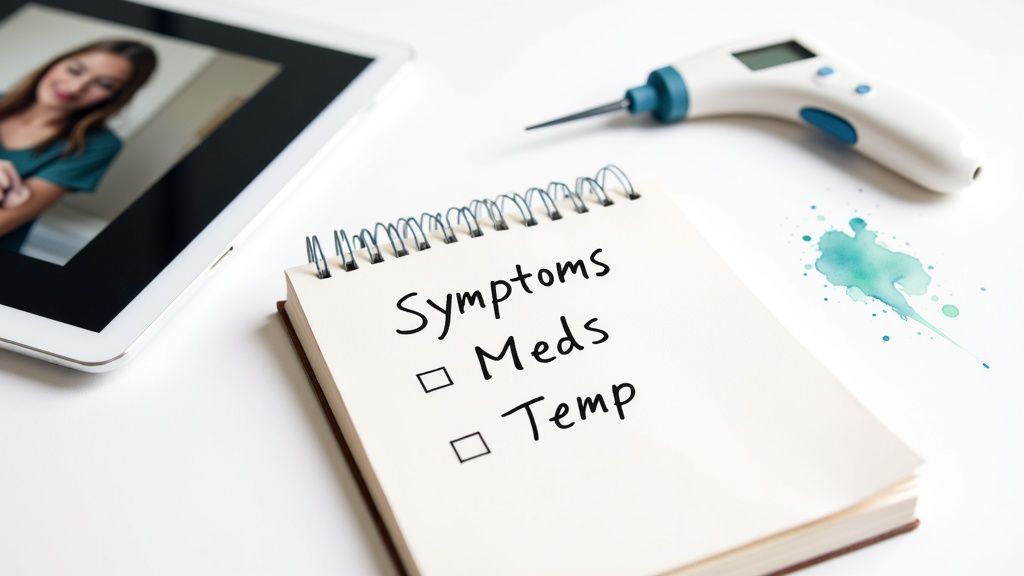
With that handled, you can focus on the medical details. When you're feeling sick, your memory isn't always at its best. Before you even start the online intake form, jot down a quick summary of your symptoms.
Creating Your Symptom Snapshot
A clear, concise summary helps the physician figure out the problem quickly. Before your visit, have this information ready to go:
- Main Complaint: What’s the number one reason for your visit? Be specific. "Burning sensation when I urinate" is much more helpful than just "not feeling well."
- Timeline: When did this all start? Has it been getting better, worse, or staying the same?
- What You've Tried: Have you taken any over-the-counter meds like Tylenol or tried any home remedies? Let them know what did or didn't work.
- Key Vitals: If you can, take your temperature. Knowing if you have a fever is a huge piece of the puzzle.
Having a list of your current medications and any known allergies is non-negotiable. This is a critical safety step. It helps the doctor avoid prescribing something that could cause a bad reaction with what you're already taking.
By pulling these details together beforehand, you're painting a clear picture for the physician. This allows them to give you an effective diagnosis and treatment plan without any frustrating back-and-forth. A few minutes of prep ensures your virtual visit is as productive as possible.
Handling Prescriptions and Next Steps
So, your virtual consultation is over. Great! But your care doesn't stop when the video call ends. Figuring out your medication and follow-up plan is just as critical, especially when you're paying out-of-pocket and trying to keep costs down.
If the doctor decides you need medication, they’ll send an e-prescription straight to the pharmacy you chose during intake. It’s a seamless handoff—you usually just need to head over and pick it up. Our guide on getting an online prescription breaks down exactly how this simple, secure process works.
How to Keep Medication Costs Down
It's important to remember that the consultation fee for online urgent care no insurance doesn't include the price of your medication. That's a separate cost, but this is where you can take control and find some serious savings at the pharmacy.
- Always Ask for Generic Drugs: This is the easiest win. Ask your telehealth doctor if a generic option is available. Generics have the same active ingredients as brand-name drugs but often cost a staggering 80-85% less.
- Use Prescription Discount Cards: Services like GoodRx or SingleCare are completely free and can slash the cash price of your prescriptions. You can even use their apps to compare prices before you decide which pharmacy to use.
- Shop Around for Your Pharmacy: Don't just default to your usual spot. The price for the very same medication can vary dramatically between a big-box store pharmacy, a grocery store, and your local independent pharmacy. A few minutes of research can save you a lot.
Pro Tip: Make sure you tell your telehealth provider that you're a self-pay patient. They're usually well-versed in lower-cost alternatives and can help you find the most affordable and effective treatment right from the start.
Understanding Your Follow-Up Plan
After your appointment, you’ll get a digital summary of the visit. This is your playbook—it includes your diagnosis, treatment instructions, and any important notes from the doctor. Hang onto it.
It’s also crucial to know what to do if things don't get better. Your provider will tell you when to seek further care. If your symptoms linger or worsen, they'll advise you on whether another virtual check-in is enough or if it's time to see a doctor in person. This kind of accessible care pathway is exactly why the urgent care app market is projected to hit $13.21 billion by 2034.
Sometimes, a doctor might suggest lab work to get a clearer picture of what's going on. Understanding what these tests look for can be empowering. For example, learning what's in a Comprehensive Metabolic Panel explained can help you take a more active role in your health.
Got Questions? Let's Clear a Few Things Up
Even after you've got the basics down, it’s completely normal to have a few more questions pop up. Let's walk through some of the most common ones so you can feel totally comfortable using online urgent care without insurance.
Can I Get a Doctor's Note for Work or School?
In most cases, yes. If your online doctor agrees that you're too sick for work or school, they can issue a digital doctor's note.
It's a good idea to mention you might need one right at the start of your consultation. Just be sure to check the provider's policy first, as some platforms have specific rules about when and how they provide notes.
Are There Limits on What Can Be Prescribed?
Definitely, and this is a critical safety measure. While online doctors can prescribe a whole host of common medications—think antibiotics for that nasty UTI or refills for your allergy meds—they are legally blocked from prescribing controlled substances.
This includes certain powerful painkillers, stimulants, and some anti-anxiety medications. These drugs require a hands-on, in-person evaluation to be prescribed safely and legally. It's all about keeping patients safe and ensuring responsible medical care.
What if My Condition Is More Serious Than I Thought?
A good telehealth provider knows the limits of virtual care. If your symptoms point to something more serious—a potential emergency or a condition that just has to be checked out in person—they won't hesitate. They'll immediately tell you to head to an in-person clinic or the nearest emergency room.
Their number one priority is your well-being.
A quick but vital note: For any symptoms that could be life-threatening, like severe chest pain, major trouble breathing, or signs of a stroke, your first move should always be to call 911. Don't waste time with an online visit.
Is My Health Information Kept Private and Secure?
Absolutely. Any legitimate telehealth platform in the U.S. is required by law to be HIPAA-compliant. The Health Insurance Portability and Accountability Act is the federal law that sets the gold standard for protecting your private health information.
This means these services use secure, encrypted technology to keep your data under lock and key, just like your family doctor's office does. Before signing up, just glance at their website for a HIPAA compliance statement. It's a simple way to confirm your personal and medical details are kept completely confidential.
Ready for fast, affordable medical care from anywhere? ChatWithDr provides 24/7 access to board-certified doctors for just $39.99—no insurance needed. Get your diagnosis and treatment plan today at https://chatwithdr.com.