
When you’re dealing with the misery of a UTI, the last thing you want to do is wait. That urgent, burning feeling is a clear sign you need relief, and you need it now. The great news? You don't have to put your life on hold for an in-person appointment anymore. Getting UTI treatment online is often a matter of a few simple steps: recognizing your symptoms, finding a trusted telehealth provider like ChatWithDr, and having a quick virtual consultation. You can often go from feeling awful to having a prescription in hand in just a few hours.
Your First Steps for Online UTI Treatment
Let's be real—the symptoms of a typical UTI are hard to ignore. That constant pressure and painful urination are more than just an inconvenience. Thankfully, the boom in telehealth means you can get diagnosed and treated right from your couch.
This shift to digital care is massive. The global market for UTI treatment is expected to hit USD 15.08 billion by 2032, and a huge part of that growth is because so many people are turning to online consultations. It’s clear that telehealth has become a reliable, go-to option for modern healthcare.
Are Your Symptoms Right for Telehealth?
Before you jump online, a quick self-check is in order. Telehealth is fantastic for what we call "uncomplicated" UTIs. These come with the classic, tell-tale signs that are more annoying and painful than dangerous.
You're likely a great candidate for online care if you're experiencing:
- A powerful, non-stop urge to pee
- A burning or stinging sensation when you go
- Having to urinate frequently, but only in small amounts
- Urine that looks cloudy or has a strong, unusual smell
- Pain or a feeling of pressure in your pelvic area, right around the pubic bone
However, some symptoms are red flags that mean you need to see a doctor in person, and fast. If you have a high fever, chills, intense pain in your back or side, or are feeling nauseous, it could be a sign the infection has moved to your kidneys. That’s a much more serious situation that requires immediate, hands-on medical attention.
This quick visual guide can help you decide the best course of action.
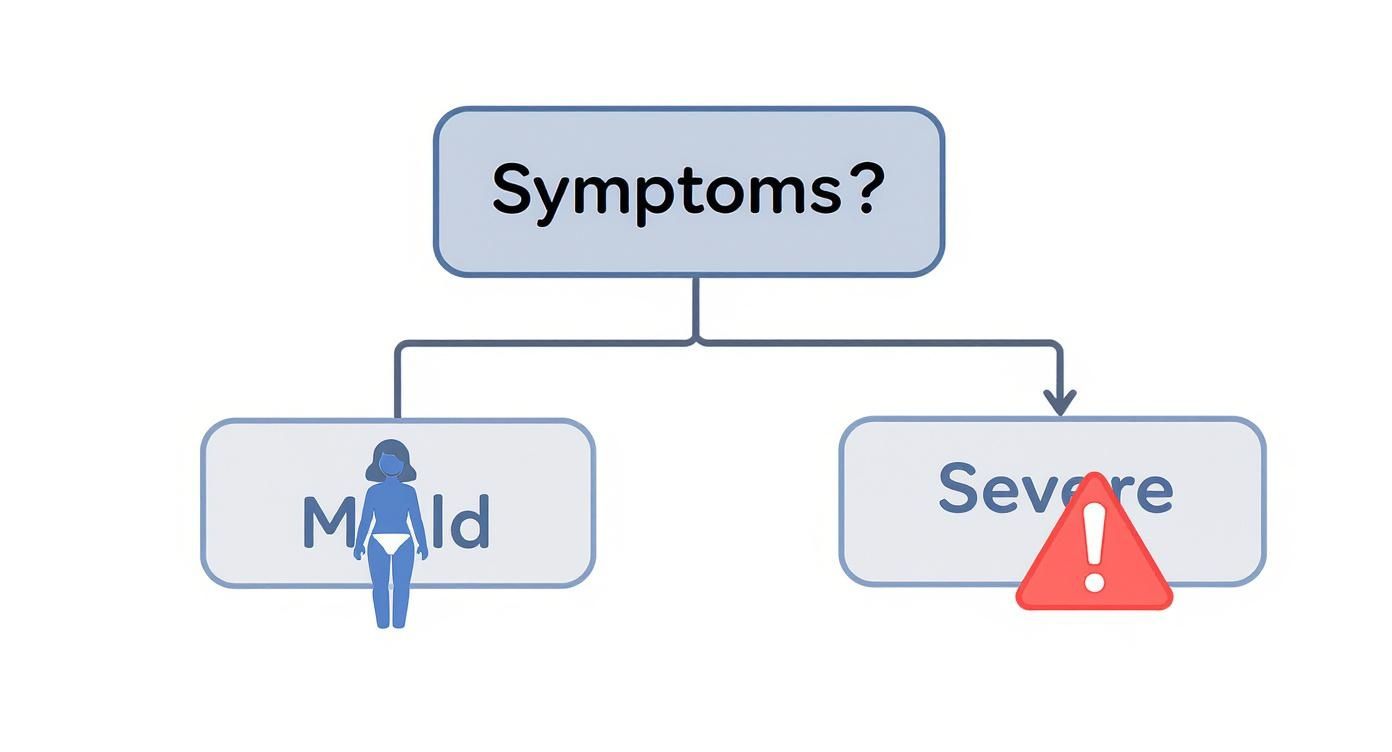
As you can see, if your symptoms are in the "mild" category, an online consultation is a great fit. But if you’re seeing any of the "severe" warning signs, an urgent in-person visit is the right call.
Should You Use Telehealth for Your UTI Symptoms?
This table can help you quickly assess if your symptoms and health profile are a good match for a telehealth consultation for a UTI.
| Symptom or Condition | Typically Suitable for Online Treatment | May Require In-Person Visit |
|---|---|---|
| Urinary Symptoms | Burning, urgency, frequency | Blood in urine, severe pelvic pain |
| Systemic Symptoms | None | Fever, chills, nausea, vomiting |
| Pain Location | Lower abdominal pressure | Back or side (flank) pain |
| Patient Profile | Healthy adult female | Male, pregnant, diabetic, recurring UTIs |
Ultimately, if your symptoms feel straightforward and you're otherwise healthy, telehealth is a safe and effective option. If anything feels "off" or severe, it's always better to be cautious and seek in-person care.
How Online Consultations Work
So, what does the process actually look like? Most telehealth visits for UTIs are incredibly straightforward. While some cases might benefit from essential diagnostic tools like urinalysis that you can do at home, many doctors can confidently diagnose a simple UTI based on your symptoms alone.
Platforms like ChatWithDr have made it even easier. They offer text-based consultations 24/7 nationwide. For a flat fee of $39.99, you fill out a secure medical form detailing what you're experiencing. A board-certified physician reviews it, makes a diagnosis, and can send a prescription directly to your preferred pharmacy.
The biggest win with telehealth is the speed. Instead of trying to squeeze in an appointment days from now, you can get help almost immediately. That quick turnaround is everything when you're in pain and just want to start feeling better.
Choosing the Right Telehealth Platform
With so many online options for UTI treatment, picking the right service can feel overwhelming. But once you know what to look for, it's much easier to find a trustworthy, convenient, and safe platform that fits your needs. The trick is to focus on a few key factors that separate the truly reliable providers from the rest.
This digital shift in healthcare is huge. The global market for UTI treatments was valued at USD 10.78 billion in 2025 and it's only expected to grow, partly because telemedicine makes getting care so much easier. More choices are great for you, but it also means you have to be a little more careful when picking a service.

Verify Provider Credentials and Licensing
Your first checkpoint should always be about legitimacy. Is there a real, qualified doctor on the other end? Any reputable telehealth platform will only use board-certified and state-licensed physicians, and this information should be easy to find on their website. This isn't just a nice-to-have; it’s a non-negotiable that ensures the person diagnosing you is legally allowed to practice medicine in your state.
For example, a platform like ChatWithDr provides care in all 50 states by using a network of U.S.-based doctors who meet these exact requirements. Don't ever feel hesitant to look for this verification—it’s your best assurance of quality care.
Prioritize Privacy and Security
Your health information is incredibly sensitive, so protecting it is a top priority. Any telehealth service you use must be HIPAA-compliant. This is the federal law that sets strict privacy and security rules for handling patient data, and it's what keeps your information safe.
Look for a clear privacy policy and signs that the platform is secure and encrypted. This is your guarantee that your consultation and personal details are kept just as confidential as they would be in a physical doctor's office. If a site doesn't mention HIPAA compliance, consider that a major red flag and move on.
Evaluate Consultation Style and Availability
Telehealth isn't a one-size-fits-all solution. Different services offer different ways to communicate, and the best one for you will depend on your own comfort level and how quickly you need help.
- Asynchronous Text-Based Chat: This is perfect for straightforward issues like an uncomplicated UTI. You fill out an intake form, and a doctor gets back to you via a secure text-based chat. Services like ChatWithDr use this model to provide 24/7 access, meaning you can start the process anytime, day or night, without needing to schedule anything.
- Scheduled Video Calls: Some people just feel more comfortable seeing a doctor face-to-face. This method works well but usually requires scheduling an appointment in advance, which might not be ideal when you're in pain and need relief fast.
- Phone Calls: A classic for a reason. This option gives you direct communication without needing a camera or a strong internet connection for video.
Think about what works for your situation. If you need fast, discreet help at an odd hour, a text-based service offers convenience that's hard to beat.
The right platform should fit your life, not the other way around. When you're dealing with the pain of a UTI, the last thing you want is to wait for a scheduled appointment. A service that operates around the clock provides true on-demand care.
Look for Transparent Pricing
Nobody likes surprise medical bills. A trustworthy telehealth provider will be completely upfront about its costs. Look for a simple, flat-fee structure so you know exactly what you’re paying before you even start your consultation.
ChatWithDr, for instance, charges a flat $39.99 fee for a consultation. There are no hidden charges or surprise bills later. This kind of transparency lets you make an informed decision without stressing about the final cost. When you're comparing different telehealth services, clear and upfront pricing should be high on your checklist.
Preparing for Your Online Medical Consultation
An online consultation isn't quite the same as a traditional doctor's visit, but a little prep work can make a world of difference. When you know what info to have on hand, you give the doctor a crystal-clear picture of your health. That means a faster, more accurate diagnosis—especially when you need UTI treatment online and clear communication is everything.
Think of it like getting your thoughts in order before a big meeting. When you're in pain, it’s surprisingly easy to forget key details. A few quick notes can be a lifesaver, particularly with text-based services where you need to be both concise and thorough.
Your Pre-Consultation Checklist
Before you even start filling out an online intake form, it helps to pull together a few key pieces of information. Having this ready will make the whole process smoother and much less stressful.
- Symptom Details: Be specific. When did the symptoms start? Are they constant, or do they come and go? Think about how to describe the pain—is it a sharp burn, a dull ache, or just constant pressure? Make a note of how often you feel the urge to go.
- Medical History: Have you had UTIs before? If so, how often, and when was your last one? Don’t forget to mention any other chronic conditions you have, like diabetes or kidney issues.
- Current Medications: Make a quick list of everything you take. This includes prescriptions, over-the-counter meds, vitamins, and even herbal supplements. If you know the dosages, even better.
- Known Allergies: This one is critical. Be absolutely sure to list any allergies you have, especially to antibiotics like sulfa drugs or penicillin.
Getting this info together ensures the physician has the full story, allowing them to make a safe, informed decision about your treatment.
How to Talk to Your Online Doctor
Once you start the actual consultation, your goal is to give a clear and honest account of what you're feeling. Whether you're on a video call or texting with a service like ChatWithDr, your words paint the clinical picture for the doctor.
If you’re in a text chat, get straight to the point. Instead of just saying, "I feel sick," try something more detailed:
"For the last 2 days, I've had a strong burning feeling when I pee. I also feel like I have to go every 20 minutes, even if nothing comes out."
That level of detail is exactly what a doctor needs to hear.
Don't downplay your symptoms or feel embarrassed. The doctor is there to help, and they need to understand the full extent of your discomfort to treat you properly. Being open is the fastest way to get the right medicine and start feeling better.
The doctor will almost certainly ask some follow-up questions to confirm it's a simple UTI and not something more complicated. They might ask about fever, back pain, or any unusual discharge. Answering these questions as completely as you can helps them give you the best possible care. A few minutes of prep makes for a successful, stress-free consultation.
Getting and Filling Your Prescription Online
After your doctor confirms a UTI, the next step is getting that all-important prescription. This is where telehealth really shines. Instead of dealing with a paper script, your doctor zaps an e-prescription straight to your preferred pharmacy, often just moments after your consultation wraps up.
The whole process is incredibly simple. When you're filling out your intake form with a service like ChatWithDr, you'll be asked to pick a local pharmacy. You can just pop in your zip code and find the most convenient spot—whether that’s the 24-hour one down the street or the one inside your go-to grocery store.
What to Expect at the Pharmacy
Once the prescription is sent over, it’s a smart move to give the pharmacy a quick call. Just confirm they’ve received it and ask when it might be ready. A simple two-minute call can save you a wasted trip.
When you get there, all you’ll need is your name and date of birth. You can use your insurance for the medication itself, just like you would with any prescription from an in-person doctor. If you want a deeper dive, you can explore a full guide on how an online prescription works from beginning to end.
This shift toward telehealth is making healthcare so much more accessible. For something like a UTI, it means getting timely treatment without the hassle, giving patients the convenience and privacy they need.
Common UTI Medications and What to Do If There's a Snag
For a straightforward UTI, doctors usually prescribe a short course of antibiotics. A few of the most common ones you might see are:
- Nitrofurantoin (Macrobid)
- Trimethoprim-sulfamethoxazole (Bactrim)
- Fosfomycin (Monurol)
These are typically very effective. But what happens if you get to the pharmacy and run into an issue, like a delay or a question about the prescription? First off, don't panic.
Pro Tip: If you hit a roadblock at the pharmacy, your first step should be to contact your telehealth provider's support team. They can get in touch with the doctor and the pharmacy directly to sort out any mix-ups or tech glitches. It’s the fastest way to get things resolved so you can get your medication and start feeling better.
What to Do After You Start Treatment
Starting antibiotics is a massive step toward feeling normal again, but your job isn't quite done just because you've picked up your prescription. The next few days are critical for knocking out the infection completely and making sure it doesn't come roaring back.
Here’s the single most important rule: finish the entire course of antibiotics. I can't stress this enough. Even if you feel a million times better after just one or two doses, stopping early is a huge gamble. Your worst symptoms might be gone, but the bacteria that caused the UTI can still be hanging around. Finishing the full prescription is the only way to ensure you’ve wiped them out for good, which dramatically lowers the risk of the infection returning—often stronger and more resistant to treatment.
Managing Your Symptoms While You Heal
While the antibiotics go to work, you can do a few things at home to ease any lingering discomfort and help your body recover faster.
- Hydrate, Hydrate, Hydrate: Water is your absolute best friend right now. Drinking plenty helps dilute your urine and makes you pee more often, which is exactly what you want—it physically flushes bacteria out of your system. Aim for at least eight glasses a day, maybe more.
- Bring on the Heat: A heating pad or a warm compress placed on your lower abdomen can be a lifesaver for soothing that awful bladder pressure and cramping. Just 15-20 minutes at a time can provide some serious relief.
- Get Some Over-the-Counter Help: Pain relievers specifically for UTIs, like products with phenazopyridine (you probably know it as Azo), are great for numbing the urinary tract and taking the edge off the burning. Just a heads-up: it will turn your urine a vibrant, and sometimes startling, orange-red color.
These simple home remedies really do make a difference in how you feel while the medicine does its thing.
When to Seek Further Medical Attention
Getting a UTI diagnosis online works incredibly well for straightforward infections, but you absolutely have to know when a situation is escalating. If your symptoms don't start getting better within 24 to 48 hours of starting antibiotics, or if you feel worse, it's time to take action. This could be a sign that the bacteria are resistant to the antibiotic you were given, or that something more serious is going on.
Your first move should be to follow up with your telehealth provider. A platform like ChatWithDr is set up for this kind of quick check-in. However, certain "red flag" symptoms are non-negotiable and demand an immediate, in-person medical evaluation at an urgent care clinic or even the ER.
Keep a close eye out for these warning signs:
- High Fever or Chills: A temperature climbing above 101°F (38.3°C) is a major indicator that the infection may have moved beyond your bladder and into your kidneys.
- Severe Back or Side Pain: If you feel a sharp, intense pain in your flank area—just below your ribs on either side of your spine—that’s a classic symptom of a kidney infection.
- Nausea and Vomiting: Feeling sick to your stomach and being unable to keep fluids down is a serious problem. You need immediate help to prevent dehydration and treat what has likely become a more severe infection.
Knowing these signs is crucial for your safety. While telehealth is an amazing tool for getting initial treatment, recognizing when you need to escalate your care ensures you get the right help, right when you need it.
Common Questions About Online UTI Treatment
It's natural to have a few questions when you're thinking about telehealth for the first time. Being curious is a good thing, especially when it comes to your health. Let's walk through some of the most common concerns people have when they decide to get UTI treatment online.
The big one is always about the diagnosis. How can a doctor really know you have a UTI without a lab test or seeing you in person? The truth is, uncomplicated UTIs present with a very distinct set of symptoms. That classic trio of painful urination, a constant urge to go, and going more frequently paints a clear clinical picture that physicians are trained to spot right away.
Telehealth doctors use a series of targeted questions to confirm these tell-tale signs and, just as importantly, to rule out anything more serious. For most people who aren't pregnant and have a straightforward medical history, diagnosing a UTI based on symptoms is a safe and standard medical practice.
Safety, Privacy, and Effectiveness
So, is it actually safe and private? Yes, as long as you're using a reputable service. Platforms like ChatWithDr are required by law to be HIPAA-compliant. This means they use secure, encrypted technology to protect your personal health information, making your online chat just as confidential as an in-office visit. Always give a platform's privacy policy a quick scan before you start.
Effectiveness is another fair question. What if the antibiotics don't work? If your symptoms don't start getting better within 24 to 48 hours—or if you feel worse—it's time to reach out to the provider for a follow-up. It could mean the bacteria are resistant to that specific antibiotic, or maybe there's something else going on. A quick follow-up lets the doctor reassess and adjust your treatment, which might mean a different medication or a recommendation for in-person testing.
The key here is good communication. A quality telehealth service makes it easy to check back in if things aren't improving. Never hesitate to reach out if you feel something is off.
Who Can Use Online Services
What about men? Can they get UTI treatment online? This is usually handled with more caution. A UTI in a man can sometimes point to an underlying issue with the prostate or urinary tract that really needs a physical exam. Because of this, you’ll find that many telehealth platforms will refer men to in-person care as a standard safety protocol.
Finally, you might be wondering if your symptoms are definitely from a bacterial infection. If you're not sure, it can be helpful to read up on understanding the differences between viral and bacterial infection symptoms. At the end of the day, though, your telehealth doctor is the best person to make that call.
For more detailed answers, you can almost always find a good FAQ section on the provider's website. You can find more information by reviewing this extensive telehealth FAQ page, which covers a wide range of common topics.
Ready for fast, convenient relief? With ChatWithDr, you can get a diagnosis and treatment plan from a board-certified U.S. physician 24/7, often within hours. Start your affordable, text-based consultation now at https://chatwithdr.com.