
When a UTI hits, the first thing on your mind is getting relief, and fast. The burning, the constant need to go, the cramping—it’s miserable. The good news is you can take immediate steps at home to calm things down. The trifecta for initial comfort is to start chugging water, grab a heating pad for the cramps, and consider an over-the-counter urinary pain reliever to take the edge off the burning. These actions won’t cure the infection, but they can make you feel human again while you figure out your next move.
Your First Steps For At-Home UTI Relief
That sudden, unmistakable feeling of a urinary tract infection demands a quick response. While you can't cure a bacterial infection with home remedies alone, they are absolutely crucial for managing the intense discomfort and giving your body a fighting chance. Knowing how to handle a UTI at home starts with these simple comfort measures. They are your bridge to getting proper medical care, and they can make a world of difference in how you feel right now.
The game plan is simple: flush the bacteria out, soothe the physical pain, and directly target that awful burning sensation.

Prioritize Aggressive Hydration
Water is your best friend during a UTI. Seriously. The more you drink, the more you’ll dilute your urine, which immediately makes urination less painful. Concentrated urine is more acidic and irritating to an already inflamed bladder.
On top of that, constant hydration helps you pee more often, physically flushing bacteria out of your system before they have more time to multiply. Aim for at least 8-10 large glasses of water a day. My pro tip? Keep a giant water bottle glued to your hand and sip constantly. Don't wait until you're thirsty; just keep the flow going.
Use Over-The-Counter Pain Relievers
While you're working on flushing your system, you need something to tackle the pain directly. This is where your local pharmacy comes in handy.
- Phenazopyridine: This is the magic ingredient in products like Azo or Uristat. It’s not an antibiotic; it’s a urinary analgesic, meaning it specifically numbs the urinary tract to relieve pain, burning, and urgency. It’s incredibly effective for symptom relief. Just be warned: it will turn your urine a shocking bright orange-red color. This is totally normal and harmless. You shouldn't use it for more than two days without seeing a doctor.
- General Painkillers: Don’t forget about the basics. Nonsteroidal anti-inflammatory drugs (NSAIDs) like ibuprofen are great for reducing inflammation and easing the dull, cramping ache in your lower abdomen or back that often comes with a UTI.
Important Note: Phenazopyridine is a lifesaver for symptoms, but it does nothing to the underlying bacteria. Think of it as a temporary fix, not a cure. Always follow the directions on the package.
Apply Gentle Heat For Comfort
That deep, crampy ache in your lower belly is one of the worst parts of a UTI. A little warmth can work wonders by helping the muscles in your pelvic area relax.
Grab a heating pad, set it to low, and place it on your lower abdomen for about 15 minutes at a time. A warm compress works, too. This simple trick can soothe those bladder spasms and take the edge off the pain, making it easier to rest. Just be sure to put a towel between the pad and your skin, and never fall asleep with it on.
Quick Guide for Immediate UTI Symptom Management
Feeling overwhelmed? Here’s a quick-glance table to help you focus on what to do right now for immediate relief.
| Action | How It Helps | Practical Tip |
|---|---|---|
| Drink Lots of Water | Dilutes urine to reduce burning and helps flush bacteria from the bladder. | Keep a large, full water bottle with you at all times and sip continuously. |
| Take Phenazopyridine | A urinary pain reliever that specifically numbs the urinary tract to ease pain and urgency. | Don't be alarmed by the orange urine—it's a normal side effect! Don't use for more than 48 hours. |
| Use a Heating Pad | Relaxes abdominal muscles to soothe bladder pressure, spasms, and cramping. | Apply to your lower abdomen for 15-minute intervals on a low heat setting. |
| Try an NSAID | Reduces inflammation and helps with general pain, like lower backaches or pelvic discomfort. | Ibuprofen or naproxen can be effective choices. Follow the label for proper dosage. |
These steps are your first line of defense against UTI misery. They give you the breathing room you need to take the next, most crucial step: getting a proper diagnosis and the right treatment to knock out the infection for good.
Using D-Mannose and Cranberry for Natural Support
Once you’ve got hydration and pain relief handled, it’s natural to look for other ways to support your body's fight against a UTI. When you start searching for how to treat a UTI at home, two names pop up constantly: D-mannose and cranberry. These aren't just old wives' tales; there's real science explaining why they can be powerful allies for your urinary health.
But it’s important to be realistic about what they can and cannot do. Think of them as supportive measures, not standalone cures for a full-blown infection. They work best for prevention or right at the very first twinge of UTI symptoms.

How D-Mannose Helps Your Bladder
D-mannose is a simple sugar found in fruits like cranberries and peaches, but it behaves very differently from the sugar in your cookie jar. Your body doesn't really metabolize it, so it passes right through your system and gets concentrated in your urine.
This is where the magic happens. A staggering 90% of UTIs are caused by E. coli bacteria. These pesky microbes use tiny, sticky, finger-like projections to latch onto the walls of your bladder, making them incredibly difficult to flush out. D-mannose acts like a decoy. The E. coli are actually more attracted to the D-mannose molecules floating in your urine than they are to your bladder lining.
They grab onto the D-mannose, lose their grip on your bladder wall, and get flushed right out when you urinate. It’s like coating a sticky surface with Teflon—nothing can stick where it shouldn't.
Key Takeaway: D-mannose works by preventing E. coli from sticking to the urinary tract lining, not by killing bacteria directly. This makes it a valuable tool for both managing early symptoms and preventing future infections.
Choosing the Right D-Mannose
To get results, the dosage and form of D-mannose matter. You'll usually find it as a powder or in capsules.
- For acute symptoms: Many people find success by taking 1.5 to 2 grams of D-mannose powder mixed with a big glass of water every two or three hours for the first day or two.
- For prevention: If you're prone to recurrent UTIs, a daily maintenance dose of 1 to 2 grams is often recommended.
The powdered form is a great choice because it dissolves easily in water, helping you hit those all-important hydration goals at the same time. Always look for a pure D-mannose product without a bunch of added sugars or fillers.
Recent studies have really solidified its reputation. Research shows D-mannose achieved a cure rate of 91.3% for women with uncomplicated UTIs, which is remarkably close to the effectiveness of standard antibiotics. You can learn more about the clinical findings on D-mannose for UTIs.
The Truth About Cranberry
The connection between cranberry and urinary health is legendary, but here's the catch: not all cranberry products are created equal. Chugging that sugary cranberry juice cocktail from the grocery store probably won't help—in fact, the high sugar content might even make things worse.
The real power of cranberries lies in compounds called proanthocyanidins (PACs). Much like D-mannose, these PACs make the bladder lining too slippery for E. coli to get a foothold.
To actually get a therapeutic dose, you need to be strategic.
- Pure, Unsweetened Cranberry Juice: If you go this route, it has to be 100% pure cranberry juice—not from concentrate and with zero added sugar. Be warned, it's incredibly tart.
- Cranberry Capsules or Tablets: This is usually the most practical and effective way to go. Check the label for a supplement that specifies its PAC content, aiming for a product that delivers at least 36 milligrams of PACs per day.
- Dried Cranberries: While they're a fine snack, they usually have added sugar, and you'd have to eat an enormous amount to get enough PACs to make a difference.
By focusing on the active compound (PACs) instead of just the fruit, you can make a much smarter choice. Pairing these natural supports with aggressive hydration gives your body a strong, multi-pronged strategy for managing UTI symptoms from home.
Getting Modern UTI Treatment with Telemedicine
While at-home remedies are fantastic for managing those awful UTI symptoms, they can’t do one crucial thing: kill the bacteria causing the infection. For that, you need an antibiotic. In the past, this meant a whole song and dance—calling the doctor's office, waiting for an appointment, sitting in a germ-filled waiting room, and then trekking to the pharmacy.
Thankfully, those days are over for most simple UTIs. Telemedicine has completely changed the game. You can now get a professional diagnosis and a prescription sent straight to your pharmacy, often within a couple of hours, all without leaving your couch.
How a Virtual UTI Consultation Actually Works
Getting a UTI diagnosis without a physical exam or a urine test might sound a bit strange at first, but for uncomplicated UTIs, it's an incredibly effective and standard practice. Board-certified physicians can accurately diagnose a simple UTI based on its classic, tell-tale symptoms.
When you use a service for online UTI treatment, the process is designed to be fast, private, and straightforward.
- You fill out a secure medical questionnaire. This is your chance to explain exactly what you're feeling—the burning, the constant urge to pee, any pelvic discomfort, and other key details that paint a clear picture for the doctor.
- A licensed doctor reviews your case. A physician in your state carefully goes over your intake form. They're trained to spot the classic signs of a UTI and, just as importantly, to identify any red flags that might point to a more complicated problem.
- You get a diagnosis and treatment plan. The doctor will message you with a diagnosis and, if it’s appropriate, prescribe an antibiotic. The whole thing happens on a secure, private messaging platform, so you don't have to deal with any awkward video calls when you're feeling miserable.
This text-based approach is a huge relief when you just want fast, discreet care without any hassle. It's a super-efficient way to get professional guidance on how to treat a UTI at home.
The ChatWithDr Experience
Using a platform like ChatWithDr makes this process incredibly simple. You just select "UTI" as your condition, answer a few questions about your symptoms and medical history, and submit your case. A U.S.-based, board-certified doctor reviews everything and usually gets back to you within an hour or two.
If an antibiotic is the right move for you, they send the prescription electronically to whatever local pharmacy you choose. You’ll get a notification, and all that's left to do is go pick it up. This streamlined system gets you on the road to recovery in no time.
Why Telemedicine Is a Game-Changer: For a common, frustrating issue like a UTI, virtual care just makes sense. It saves you time, cuts out the stress of an in-person visit, and gives you access to care no matter where you are—all for a single, flat fee.
But Is Telemedicine Really Effective for UTIs?
The convenience is obvious, but does it actually work? The data gives a resounding yes. A major 2023 study looked at thousands of telemedicine appointments for UTIs. The results were impressive: an incredible 89.7% of patients said their symptoms were gone within seven days of their virtual visit.
You can discover more insights from this UTI telemedicine study yourself, but that success rate speaks volumes about how effective remote care is for urinary tract infections.
This model of care is built for the real world, where for most women, a UTI is an unmistakable (and unwelcome) recurring issue. When you know the symptoms like the back of your hand, you just need a fast pass to the right medication. Telemedicine services bridge that gap safely and efficiently, letting you move from painful symptoms to an effective treatment plan in just a few clicks.
Knowing When to See a Doctor Immediately
While managing symptoms from home can bring much-needed relief, it's crucial to know the limits of at-home UTI care. A simple bladder infection is one thing, but it can quickly escalate into something far more serious if it isn't dealt with properly.
Honestly, knowing the red flags that require an immediate, in-person doctor visit is just as important as knowing how to soothe those first annoying symptoms.
If left untreated, bacteria can travel from the bladder up to the kidneys, leading to a nasty infection called pyelonephritis. This isn't something you can handle at home. It demands prompt medical attention, usually with stronger antibiotics, to prevent serious kidney damage or an even more dangerous bloodstream infection.
Recognizing the Signs of a Kidney Infection
The symptoms of a kidney infection feel very different from a standard bladder infection—they're a signal your body is fighting a much bigger battle. It's time to stop the home remedies and head straight to an urgent care clinic or the ER if you notice any of these signs:
- High Fever and Chills: A fever soaring above 101°F (38.3°C), especially with body-shaking chills, is a classic giveaway that the infection has spread.
- Intense Back or Side Pain: We're not talking about a dull ache. A kidney infection causes a sharp, severe pain in your mid-back or flank area, right below the ribs on one or both sides.
- Nausea and Vomiting: Feeling sick to your stomach or being unable to keep anything down is a huge red flag. It means the infection is likely affecting your whole system.
If these symptoms pop up alongside your usual UTI discomfort, that's your cue to get in-person medical help right away. No delays.
Key Insight: A bladder infection is an uncomfortable local problem. A kidney infection, on the other hand, is a serious systemic illness that can make you incredibly sick, very fast. Recognizing that shift is critical.
This simple chart helps visualize when online care is a great choice and when an in-person visit is the only safe option.
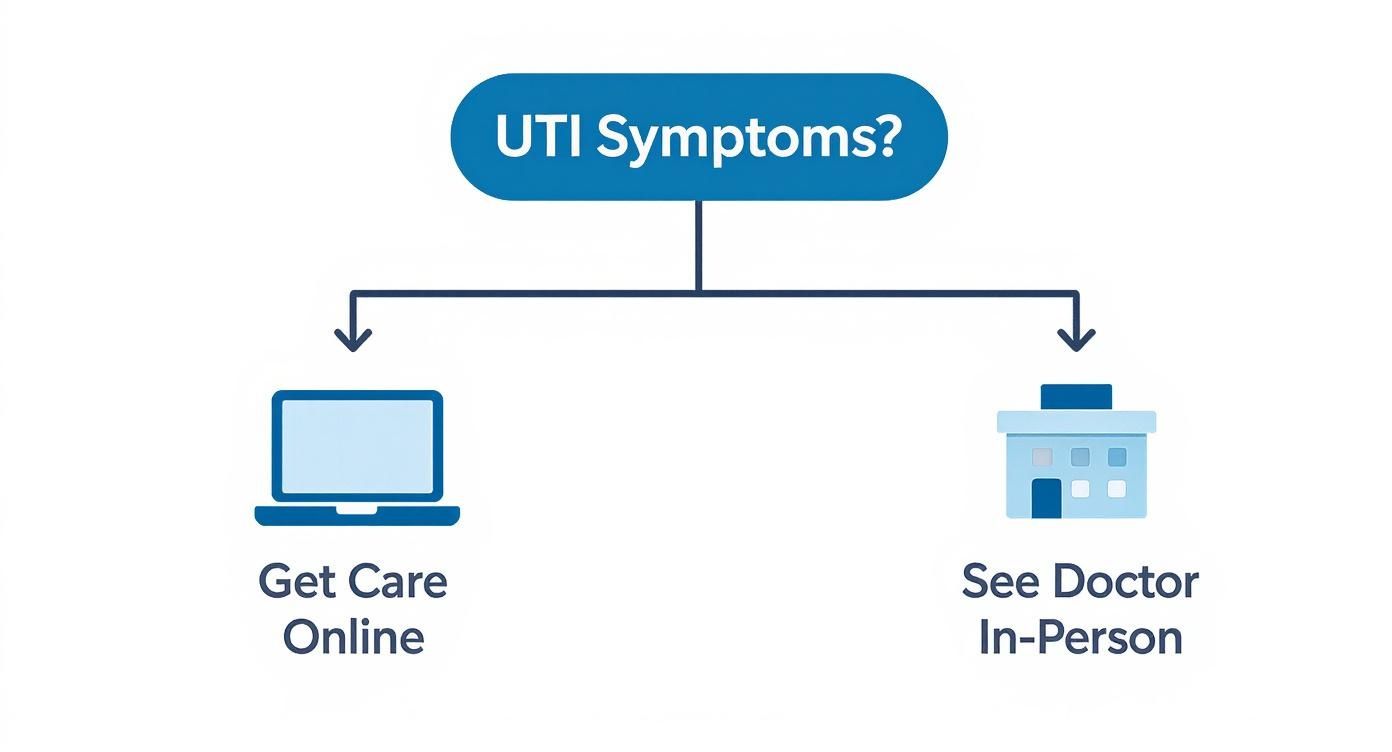
As the guide shows, standard UTI symptoms are often perfect for a remote consultation. But once you add things like a high fever or severe back pain to the mix, it's time for a hands-on medical evaluation.
When Home Treatment Is Not the Right Choice
Beyond the obvious signs of a kidney infection, some situations automatically put a UTI in the "complicated" category. In these cases, trying to treat it yourself or even using standard telemedicine isn't the safest route. You'll need a more thorough, in-person exam.
You should always see a doctor in person for a UTI if:
- You are pregnant: UTIs during pregnancy pose a higher risk of complications for both you and the baby, and they need to be managed carefully by a doctor.
- You are male: UTIs are pretty uncommon in men. When they do happen, they can signal an underlying prostate issue or a structural problem that needs a closer look.
- You have diabetes or are immunocompromised: These conditions make it tougher for your body to fight infections, raising the risk of serious complications.
- You have recurrent UTIs: If you're stuck in a cycle of getting infections over and over, a doctor needs to investigate the root cause to help you break it.
- Your symptoms don't improve after 48 hours of antibiotics: If you've already started a prescription and aren't feeling any better, the bacteria might be resistant to that specific antibiotic. You'll need a different game plan.
For straightforward, uncomplicated cases, telemedicine is a fantastic tool. Platforms like ChatWithDr give you access to a 24/7 telehealth doctor who can diagnose your symptoms and send a prescription to your pharmacy in no time. But being a smart patient means knowing when that convenience is perfect and when your health demands a face-to-face visit.
Building a Proactive UTI Prevention Routine
Once the misery of a UTI finally fades, the last thing you want is a repeat performance. Making sure it never comes back is now goal number one. This means shifting your mindset from just treating infections as they pop up to actively preventing them from starting in the first place. It's about building a simple, daily routine that makes your urinary tract a fortress against bad bacteria.
This isn’t about some magic pill. It’s a long-term defensive strategy, layering smart, powerful habits that work together to protect you. Taking these steps is incredibly empowering—it puts you back in control of your urinary health.
Harness the Power of Probiotics
One of the smartest moves you can make is to cultivate a healthy microbiome. Your body is home to trillions of bacteria, and the name of the game is making sure the good guys outnumber the bad. Probiotics, especially strains from the Lactobacillus family, are your best friends in this fight.
These beneficial bacteria set up shop in the vaginal and gut areas, creating a slightly acidic environment where UTI-causing germs like E. coli just can’t thrive. Think of them as tiny gatekeepers, making it incredibly difficult for harmful bacteria to survive, multiply, and make their way up the urethra.
And this isn't just theory—the science backs it up. One major study found that a daily probiotic routine focused on mucosal immune response led to a staggering 60-70% drop in UTI recurrences over only three months. You can dig into these probiotic findings for UTI prevention for yourself. Adding a high-quality probiotic supplement or foods like plain yogurt and kefir to your daily mix is a brilliant, evidence-based strategy.
Adopt Smart Lifestyle Habits
Sometimes the most effective prevention tools are the simplest daily habits. You’ve probably heard these tips before, but they're repeated so often for a reason: they work.
- Always Urinate After Sex: This one is non-negotiable. Sex can easily introduce bacteria toward the urethral opening. Peeing soon afterward is nature’s flush cycle, washing away microbes before they can get a foothold and cause trouble.
- Wipe from Front to Back: It’s a fundamental habit that makes a huge difference. This simple motion prevents the transfer of E. coli from the rectal area to the urethra, significantly cutting down your risk.
- Choose Breathable Underwear: Tight, synthetic fabrics like nylon create a warm, moist environment—a perfect breeding ground for bacteria. Switch to breathable cotton underwear to keep things dry and make the area far less inviting for bacterial growth.
A Real-World Scenario: Picture this: you finish a great workout in your favorite tight leggings. The mix of sweat and synthetic fabric creates a warm, damp incubator for bacteria. If you forget to change into dry clothes and cotton underwear right away, you're essentially rolling out the welcome mat for a potential UTI.
Make Strategic Dietary Adjustments
What you eat and drink has a direct line to your urinary health. While chugging water is critical during an active infection, staying consistently hydrated every day is the foundation of prevention. Keeping your system flushed helps ensure bacteria don't have time to linger and set up camp.
Beyond water, certain dietary tweaks can make your urine a more hostile place for bacteria. Vitamin C, for instance, is thought to help acidify the urine. Research suggests that a daily intake of around 100 mg of Vitamin C can help lower the risk of getting a UTI. You can easily get this from a supplement or by adding more citrus fruits, bell peppers, and strawberries to your meals.
At the same time, be aware of bladder irritants, particularly if you're prone to sensitivity. Things like coffee, alcohol, spicy foods, and artificial sweeteners can irritate the bladder lining for some people, which might make you feel more susceptible to symptoms. Learning how your body reacts to these items helps you fine-tune your diet for better urinary health. Weaving these habits into your life is the best way to stop worrying about how to treat a UTI at home and start living UTI-free.
Common Questions About At-Home UTI Treatment
When you're dealing with the pain and frustration of a UTI, it's natural to have a million questions running through your head. You want to do the right thing to feel better, fast, but it's easy to feel unsure about the best approach.
Let's clear up some of the most common questions that come up when you're trying to manage UTI symptoms from the comfort of your home. Getting straight answers will help you take control of your recovery with confidence.
How Long Until Home Remedies Start Working?
You should start to feel some initial relief from the most intense symptoms—like that awful burning sensation—within a few hours of chugging water and taking an over-the-counter urinary pain reliever. These are designed for rapid symptom control.
However, supplements like D-mannose or cranberry extract need a little more time to do their job. It can take a good 24 to 48 hours for these to build up in your system and really start making it difficult for bacteria to stick to your bladder wall.
Crucial Takeaway: If your symptoms aren't getting any better after two days of home care, or if they get worse at any point, that’s your body telling you it’s time for antibiotics. Don’t try to tough it out—reach out to a doctor right away.
Can a UTI Really Go Away Without Antibiotics?
It's possible, but it's a huge gamble. In a few rare cases, someone with a rock-solid immune system who drinks a massive amount of fluids might be able to flush out a very mild infection on their own.
But here’s the risk: an untreated bladder infection can easily travel up to your kidneys. This turns a simple UTI into pyelonephritis, a much more serious and dangerous illness.
Skipping a proper diagnosis just isn't worth it. The safest and smartest move is always to talk to a healthcare professional. They can confirm what’s going on and prescribe the right antibiotic to knock out the infection for good, preventing any scary complications down the road. For more answers to your questions, you can check out our detailed list of frequently asked questions about telemedicine.
What Foods Should I Eat or Avoid?
What you eat and drink can either soothe your irritated bladder or make it feel a whole lot worse. Your goal is to calm things down, not stir them up.
What to focus on:
- Water: This is your best friend right now. Make it your top priority.
- Unsweetened Cranberry Juice: Pure, unsweetened juice might help. Just steer clear of the sugary cocktail versions.
- Probiotic-Rich Foods: Think plain yogurt or kefir. These help support the good bacteria that keep your system in balance.
What to avoid for now:
- Coffee, tea, and other caffeinated drinks
- Alcohol
- Spicy foods
- Acidic fruits like oranges, lemons, and tomatoes
- Artificial sweeteners
Keeping your diet simple, bland, and focused on hydration gives your urinary tract the best possible chance to heal.
Feeling overwhelmed by UTI symptoms? Don't wait for an in-person appointment. With ChatWithDr, you can get a private, text-based consultation with a board-certified doctor and have a prescription sent to your pharmacy in as little as an hour—all for just $39.99. Start your UTI consultation now.